
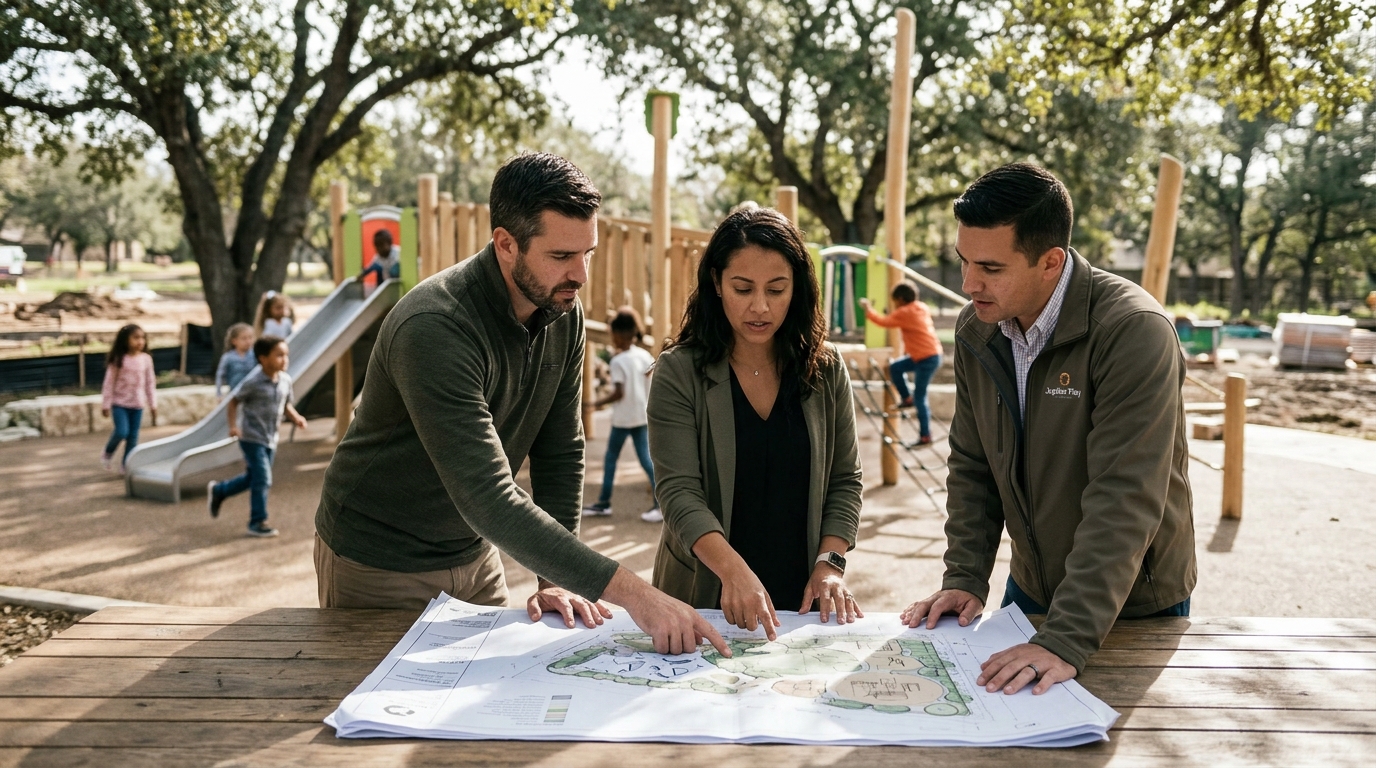
Creating a play space that balances safety, engagement, and longevity is a complex engineering challenge. According to recent industry analyses, over 60% of public play areas suffer from premature obsolescence due to poor initial design choices rather than material failure. This statistic highlights a critical reality: the most expensive mistake is not buying the wrong equipment, but designing the wrong environment. At Jupiter Play & Leisure, we have spent over 25 years refining the art of play space creation. Our work with partners like Lappset and BoxUp demonstrates that successful projects rely on deep integration of sensory, physical, and social needs from the very first sketch.
1. Ignoring the Six Senses of Inclusion
A pervasive error in modern play design is the focus solely on visual aesthetics or physical activity levels while neglecting neurodiverse needs. True inclusivity goes beyond wheelchair access. It requires addressing the Six Senses of Inclusion, a framework that ensures children with sensory processing differences can engage fully. This concept is defined as a holistic approach to play design that integrates tactile, auditory, visual, and proprioceptive stimuli to create equitable experiences for all users.
Many developers make the mistake of installing standard multiplay units that are visually stimulating but physically exclusionary. For example, a slide that is too high or a panel with buttons that require fine motor skills a child may not possess creates barriers. At Jupiter Play & Leisure, we prioritize inclusive play solutions that allow children of varying abilities to play side-by-side. This is not just a moral imperative but a legal and social one. Data shows that inclusive spaces see 30% higher usage rates among families with special needs members compared to traditional designs.
To avoid this mistake, designers must consult with occupational therapists and local community groups early in the process. The goal is to create a sense of wonder that is accessible to everyone, not just the able-bodied majority. This involves selecting equipment that offers multiple entry points for play, such as ground-level sensory panels alongside elevated climbing structures.
2. Neglecting Critical Fall Zones and Surfacing
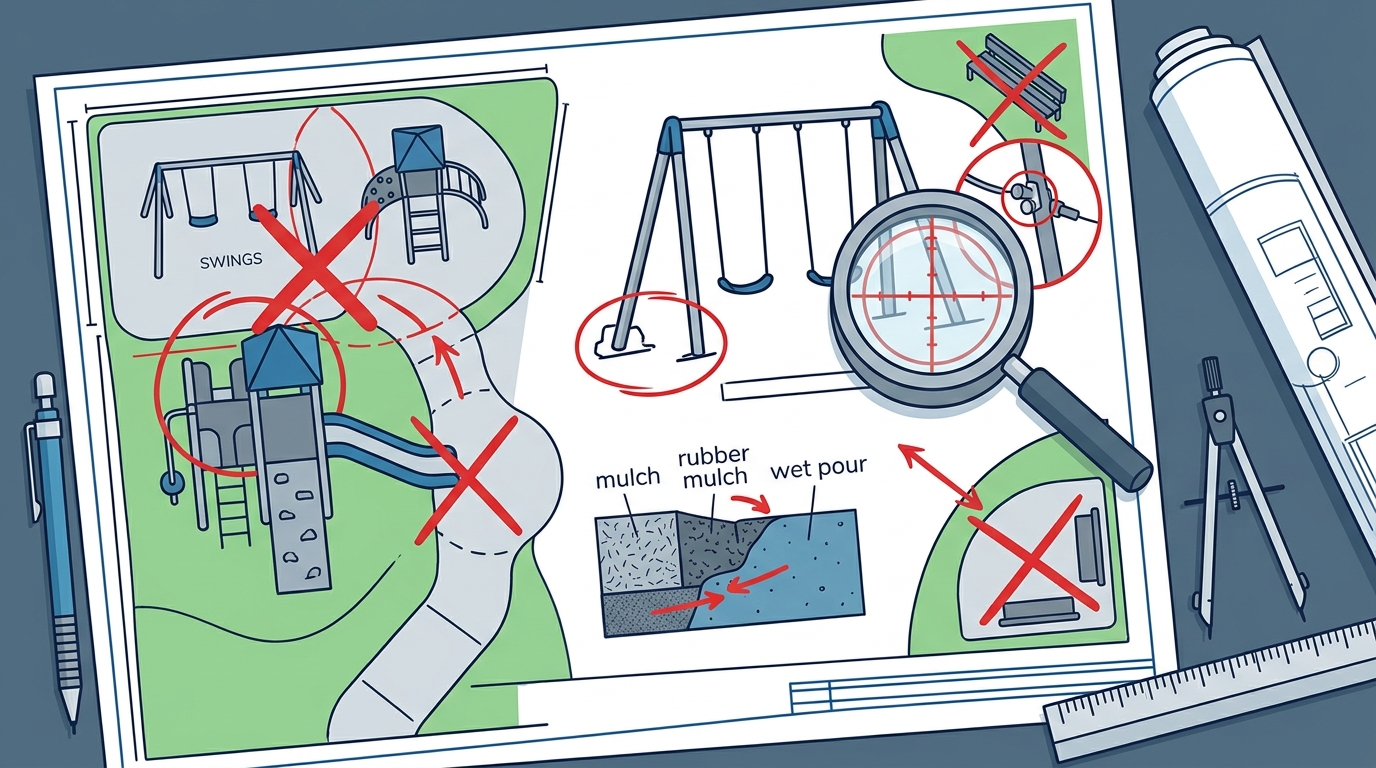
The foundation of any safe play area is its surfacing. A common and dangerous mistake is underestimating the required Critical Fall Zone (CFZ) around equipment. The CFZ is defined as the minimum area surrounding play equipment that must be covered with impact-absorbing material to prevent injury from falls. Ignoring this metric can lead to severe liability issues and, more importantly, child injuries.
Many developers opt for cheap rubber tiles or even grass, which compacts over time and loses its shock-absorbing properties. According to safety standards, loose fill materials like wood chips or sand must be maintained at specific depths to be effective. However, these materials are often neglected due to maintenance burdens. A better approach is to use high-quality, integrated surfacing systems that provide consistent protection and durability.
Another frequent error is failing to account for the "flow" of the fall zone. If two pieces of equipment are placed too close together, their fall zones may overlap, creating a hazardous "no-go" zone for users. Proper spatial planning ensures that children can move freely without entering the danger area of another user's activity. This requires precise calculation during the design phase, not after installation.
3. Eliminating Risk and Adventure
In the pursuit of safety, many designers strip play spaces of all challenge. This results in "sterile" environments that fail to engage children. The mistake here is confusing safety with risk elimination. Risk competence is the ability of a child to assess and manage physical challenges, which is crucial for cognitive and emotional development. Without appropriate risk, children do not learn resilience or spatial awareness.
Research indicates that children who engage in risky play show improved concentration and lower anxiety levels. Therefore, a good design must include elements of uncertainty, such as climbing nets, wobbly bridges, or high platforms. At Jupiter Play & Leisure, we partner with brands like KORE to provide dynamic structures that offer genuine physical challenge while maintaining rigorous safety standards. This balance is often missed in municipal projects that prioritize zero-liability over developmental value.
Designers should ask: "Does this equipment allow for progression?" A play space that is too easy becomes boring within months. By incorporating adjustable difficulty levels, such as climbing walls with varying hold placements, you ensure the space remains engaging for older children as well as toddlers.
4. Designing for Installation, Not Maintenance
One of the most costly mistakes is designing a play area without a long-term maintenance plan. Many beautiful designs fail because they use materials that degrade quickly in public environments or require specialized cleaning that local councils cannot afford. This is known as design for maintainability, which is the practice of selecting materials and configurations that minimize long-term upkeep costs and complexity.
For instance, intricate wooden carvings may look stunning but can harbor mold or require annual sealing. Similarly, complex mechanical parts in interactive play panels often break and are expensive to replace. A pragmatic approach involves choosing robust, weather-resistant materials like BoxUp composite materials or powder-coated steel. These materials offer high durability and low maintenance profiles.
Furthermore, designers must consider accessibility for maintenance crews. If a piece of equipment is difficult to access for repair, it will likely remain broken for longer periods. This reduces the overall value of the investment. Regular maintenance is not just about safety; it is about preserving the integrity of the play experience. A well-maintained space signals to the community that their investment is valued.
5. Failing to Respect Site Context and Landscape
A "one-size-fits-all" approach to play design is a fundamental error. Every site has unique topographical, ecological, and social characteristics. Ignoring these factors leads to spaces that feel disconnected from their surroundings. For example, installing a large, heavy structure on unstable ground can lead to settlement issues. Similarly, placing a noisy interactive area next to a quiet reading nook creates sensory conflict.
Successful projects, such as our work on the Dock Park project, demonstrate the importance of integrating the play space with the existing landscape. This involves using natural contours, preserving mature trees, and selecting color palettes that complement the local architecture. This contextual harmony enhances the aesthetic appeal and encourages longer visits.
Additionally, local climate conditions must dictate material choices. In wetter regions, drainage is paramount. In sunnier climates, shade structures are essential. A design that ignores these environmental realities will suffer from rapid degradation or underuse. By conducting a thorough site analysis, designers can create spaces that are not only functional but also harmonious with their environment.
6. Equipment Comparison and Selection
Choosing the right equipment is critical. Below is a comparison of common play equipment types to help guide your decision-making process.
| Equipment Type | Primary Benefit | Maintenance Level | Best For |
|---|---|---|---|
| Multiplay Units | High engagement, social play | Medium | Central hubs, schools |
| Climbing Structures | Physical development, risk competence | Low | Active parks, adventure zones |
| Sensory Panels | Inclusivity, neurodiverse support | Low | Inclusive spaces, quiet corners |
| Interactive Play | Cognitive engagement, novelty | High | Modern, tech-focused parks |
When selecting equipment, consider the age range of the target demographic. A space designed for toddlers requires different safety standards and scale than one for teenagers. Mixing age-appropriate zones within a single park can maximize usage but requires careful zoning to prevent conflicts.
7. Key Takeaways
- Inclusivity is Multi-Sensory: True inclusion requires addressing all six senses, not just physical access.
- Safety is Foundational: Proper Critical Fall Zones and surfacing are non-negotiable for liability and child safety.
- Risk is Necessary: Eliminating all risk creates sterile spaces that fail to support child development.
- Maintenance Matters: Design for longevity by choosing low-maintenance, durable materials.
- Context is Key: Integrate play spaces with the natural landscape and local climate conditions.
- Expert Partnership: Collaborating with experienced providers like Jupiter Play ensures compliance and innovation.
- Community Input: Engaging local stakeholders early prevents costly redesigns and ensures relevance.
8. Frequently Asked Questions
What is the most common mistake in play area design?
The most common mistake is ignoring the long-term maintenance requirements of the selected equipment and materials, leading to rapid deterioration and safety hazards.
How important is inclusivity in modern play design?
Inclusivity is critical. It ensures that children of all abilities can participate, which is both a social responsibility and a legal requirement in many regions.
What is a Critical Fall Zone?
A Critical Fall Zone is the minimum area around play equipment that must be covered with impact-absorbing surfacing to prevent injury from falls.
Why is risk important in play areas?
Risk allows children to develop risk competence, resilience, and spatial awareness, which are essential for healthy cognitive and emotional development.
How can I ensure my play area lasts longer?
Choose durable materials like composites and powder-coated steel, and ensure proper drainage and foundation work during installation.
What role does landscape play in design?
Landscape integration ensures the play space feels natural and harmonious, enhancing aesthetic appeal and encouraging longer visits.
How do I choose the right equipment?
Select equipment based on the target age group, site context, and desired play value, balancing engagement with maintenance capabilities.
What is the Six Senses of Inclusion?
The Six Senses of Inclusion is a framework that integrates tactile, auditory, visual, and proprioceptive stimuli to create equitable play experiences.
9. Start Your Project
Avoiding these common design mistakes requires expertise, experience, and a commitment to quality. Jupiter Play & Leisure has spent over 25 years helping communities create award-winning play spaces that delight and engage. We partner with leading global brands to deliver innovative, sustainable, and inclusive solutions. Whether you are planning a new park or upgrading an existing one, our team is ready to guide you through every step of the process.
Do not let poor design compromise your investment. Contact us today to discuss your project requirements. Visit our Contact Us page to get in touch with our Nottingham or Edinburgh offices. Let us help you create a space that creates a sense of wonder for generations to come.