
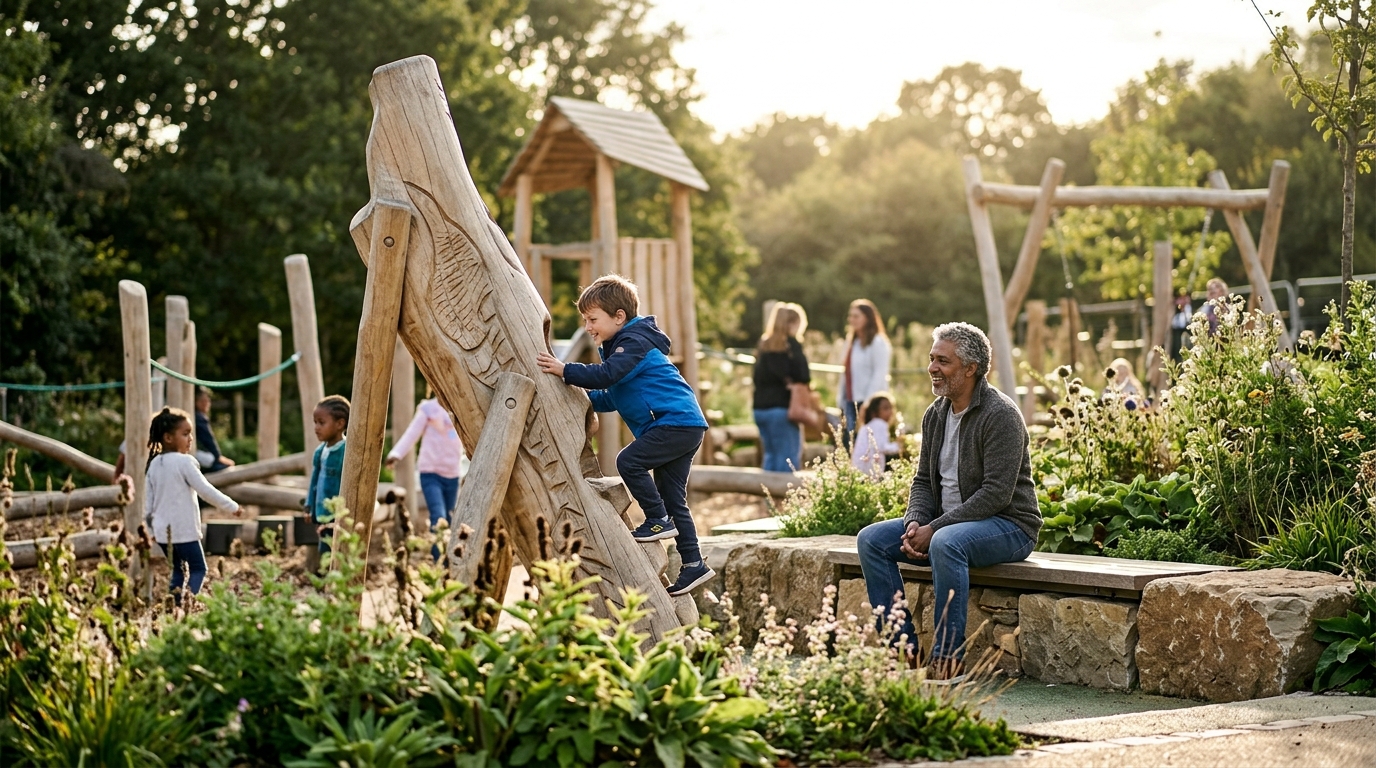
Jupiter Play and Leisure creates sustainable play solutions by integrating durable, low-maintenance materials, inclusive design principles, and biodiversity-focused landscaping into every project. This approach ensures that public spaces remain functional, accessible, and environmentally responsible for decades. This guide covers the specific strategies, materials, and collaborative processes that define our approach to long-term community value.
Sustainable Materials
Sustainable materials are the foundation of any long-lasting play environment. At Jupiter Play and Leisure, we prioritize materials that offer high durability with a low environmental footprint. Our primary focus is on high-quality timber, specifically Robinia, which is renowned for its natural resistance to rot and insects. This wood is often sourced from sustainable forests, ensuring that the raw material does not contribute to deforestation. By choosing timber over synthetic alternatives, we reduce the reliance on petroleum-based plastics in public spaces.
Steel is another critical component in our sustainable portfolio. We utilize steel for structural elements where strength is required, but we ensure that the manufacturing processes align with environmental standards. The longevity of these materials means that a play structure installed today can serve a community for twenty years or more. This extended lifespan significantly reduces the carbon cost associated with frequent replacement and manufacturing cycles.
Inclusive Play Design
Inclusive play design is the practice of creating environments where children of all abilities can play together. It is not merely about adding a single wheelchair-accessible swing; it is about designing a holistic experience that removes physical and social barriers. We believe that segregation is the enemy of community. When children with disabilities play alongside their non-disabled peers, it fosters empathy and social cohesion. Our design team uses the Six Senses of Inclusion framework to ensure that every element of the play space engages different sensory and motor skills.
This approach requires a deep understanding of motor planning and sensory processing. We design routes that allow for different levels of physical exertion and cognitive challenge. For example, a climbing structure might have a gentle ramp for one user and a challenging rope climb for another, both leading to the same destination. This shared destination encourages interaction and mutual support among users of varying abilities.
Plastic Elimination
Plastic elimination is a core tenet of our sustainability strategy. Traditional playgrounds are often filled with plastic components that degrade quickly under UV exposure and weather. These plastics eventually break down into microplastics, contaminating the surrounding soil and water. We actively work to eliminate single-use and low-grade plastics from our product ranges. Instead, we focus on natural materials and high-grade, recyclable metals.
By removing plastic from the play environment, we also improve the aesthetic quality of the space. Natural materials age gracefully, developing a patina that blends with the landscape. This contrasts with plastic, which often fades or becomes brittle. Our commitment to plastic elimination extends beyond the equipment itself to the packaging and installation materials we use on site.
Landscape Led Design
Landscape led design is an approach where the natural topography and existing vegetation dictate the placement of play equipment. Rather than flattening a site and dropping in a standard kit, we work with the land. We use mounds, slopes, and natural contours to create dynamic play experiences. This method preserves the existing ecosystem and reduces the need for heavy earthworks. It also creates a more engaging environment where the play equipment feels like a natural extension of the landscape.
This design philosophy encourages children to explore the natural world. They learn to navigate uneven terrain, which builds balance and coordination. The landscape itself becomes a play feature, with roots, rocks, and soil providing tactile and sensory experiences. By integrating the equipment into the landscape, we create a seamless transition between the built and natural environments.
Biodiversity and Rewilding
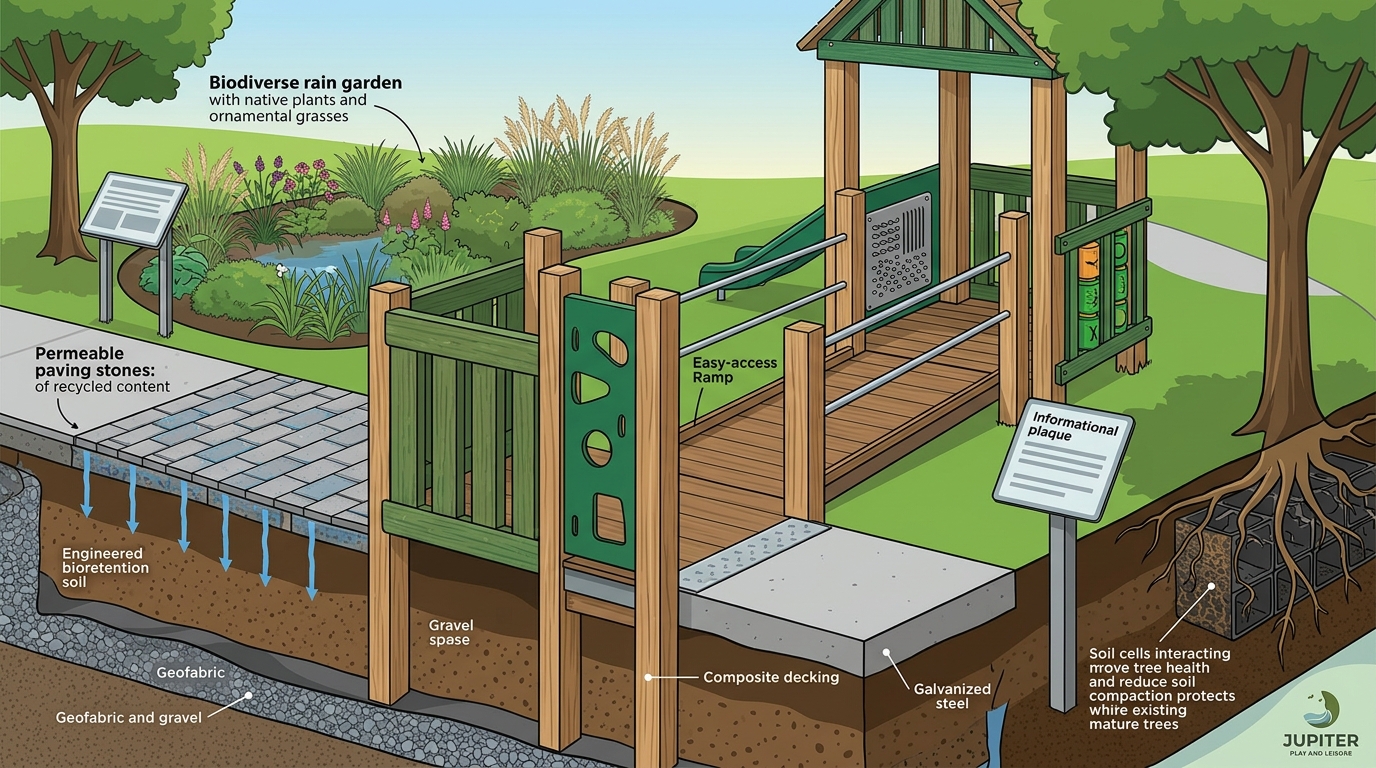
Biodiversity and rewilding are essential for creating healthy, resilient communities. Rewilding is the large-scale restoration of ecosystems to the point where nature is allowed to take care of itself. In the context of play spaces, this means moving away from manicured lawns and introducing diverse plant species. We design play areas that support pollinators, birds, and small mammals. This creates a living, breathing environment that children can observe and learn from.
By incorporating rewilding principles, we help to reverse local species decline. The play space becomes a habitat, not just a recreation area. This dual purpose maximizes the value of public land. Children who grow up in these spaces develop a deeper connection to nature, which often translates into a lifelong commitment to environmental stewardship. It is a powerful tool for educating the next generation about the importance of biodiversity.
Community Tree Planting
Community tree planting is a tangible way to engage residents in the creation of their local play spaces. We often partner with local schools and community groups to plant trees as part of the installation process. This activity provides a hands-on learning experience for children and a sense of ownership for the wider community. The trees planted today will provide shade, habitat, and carbon sequestration for decades to come.
Tree planting also helps to mitigate the urban heat island effect. As cities become hotter, green spaces with mature trees are crucial for cooling the environment. By integrating tree planting into our projects, we contribute to climate resilience. The community becomes a partner in the project, rather than just a passive user. This collaborative approach strengthens social bonds and creates a shared sense of pride in the local environment.
Zero Plastics Initiative
The Zero Plastics Initiative is our commitment to eliminating all unnecessary plastic from our operations and products. This includes reviewing our supply chain to ensure that our partners share our environmental values. We look for suppliers who use recycled materials and who are committed to reducing their own plastic waste. This initiative is not just about the end product; it is about the entire lifecycle of the play equipment.
We also educate our clients on the benefits of plastic-free play spaces. Many local authorities are under pressure to meet net-zero targets, and our Zero Plastics Initiative helps them achieve these goals. By choosing our solutions, they can demonstrate a clear commitment to sustainability. This initiative is a key differentiator in the market, showing that we are serious about our environmental impact.
Inclusive Landscape Design
Inclusive landscape design ensures that the surrounding environment is as accessible as the play equipment itself. This means creating paths that are suitable for wheelchairs, prams, and mobility scooters. We consider the surface materials, gradients, and widths of pathways to ensure that everyone can move freely through the space. We also include rest areas and seating that are accessible to all users.
This design approach recognizes that play is not just for children. Families, carers, and older adults all use these spaces. By making the landscape inclusive, we ensure that the entire community can benefit from the play area. This holistic approach to accessibility is a hallmark of our design philosophy. It creates a welcoming environment where no one feels excluded.
Low Maintenance Equipment
Low maintenance equipment is a key factor in the long-term sustainability of a play space. High-maintenance equipment requires frequent repairs, which consumes resources and labor. We design and select equipment that is robust and requires minimal intervention. This reduces the ongoing carbon footprint of the play space. It also ensures that the equipment remains safe and functional for a longer period.
Low maintenance does not mean low quality. It means smart design. We use materials that are naturally resistant to wear and tear. We also design for ease of cleaning and inspection. This approach saves local authorities time and money in the long run. It allows them to focus their resources on other community needs. It is a practical and sustainable solution for public play spaces.
Nature Integration
Nature integration is the process of blending play equipment with the natural environment. This involves using natural materials, incorporating plants, and designing for interaction with the natural world. We believe that play should not be isolated from nature. Instead, it should be a part of it. This integration encourages children to explore, discover, and learn about the natural world.
Durable Equipment Design
Durable equipment design is the practice of creating play structures that can withstand heavy use and harsh weather conditions. Durability is a key component of sustainability. If a piece of equipment breaks easily, it must be replaced, which has a significant environmental impact. We design our equipment to last for decades. This is achieved through the use of high-quality materials and robust engineering.
Durability also ensures safety. Well-maintained, durable equipment is less likely to develop hazards. This gives parents and carers peace of mind. It also reduces the risk of injury to children. By focusing on durability, we create play spaces that are safe, reliable, and sustainable. This is a core value of our business.
Community Collaboration
Community collaboration is the process of working with local residents, schools, and organizations to design and create play spaces. We believe that the people who use a space should have a say in how it is designed. We hold workshops and consultations to gather input from the community. This ensures that the play space meets the needs of its users. It also creates a sense of ownership and pride.
Collaboration extends beyond the design phase. We work with the community to maintain the space and to organize events. This ongoing engagement ensures that the play space remains a vibrant part of the community. It also helps to build social capital and strengthen community bonds. Community collaboration is a key part of our approach to sustainable play.
Key Takeaways
- Sustainable materials like Robinia timber and steel offer high durability and low environmental impact.
- Inclusive play design removes barriers and fosters social cohesion among children of all abilities.
- Plastic elimination reduces microplastic contamination and improves the aesthetic quality of play spaces.
- Landscape led design works with natural topography to create dynamic and engaging play experiences.
- Biodiversity and rewilding transform play spaces into habitats that support local ecosystems.
- Community tree planting engages residents and contributes to climate resilience.
- Low maintenance equipment reduces the ongoing carbon footprint and operational costs.
- Community collaboration ensures that play spaces meet the needs of their users and foster a sense of ownership.
Frequently Asked Questions
What materials does Jupiter Play and Leisure use for sustainable play?
We primarily use high-quality Robinia timber and steel. These materials are durable, low-maintenance, and have a low environmental footprint. We also work to eliminate plastic from our products and packaging.
How does inclusive play design benefit the community?
Inclusive play design allows children of all abilities to play together. This fosters empathy, social cohesion, and a sense of belonging. It ensures that no child is excluded from the play experience.
What is the Zero Plastics Initiative?
The Zero Plastics Initiative is our commitment to eliminating all unnecessary plastic from our operations and products. This includes reviewing our supply chain and educating our clients on the benefits of plastic-free play spaces.
How does landscape led design work?
Landscape led design uses the natural topography and existing vegetation to dictate the placement of play equipment. This preserves the ecosystem and creates a seamless transition between the built and natural environments.
Why is biodiversity important in play spaces?
Biodiversity supports healthy ecosystems and provides children with opportunities to learn about nature. By incorporating rewilding principles, we help to reverse local species decline and create a living, breathing environment.
How can communities get involved in play space design?
Communities can get involved by participating in workshops and consultations. We work with local residents, schools, and organizations to ensure that the play space meets the needs of its users.
What is the benefit of low maintenance equipment?
Low maintenance equipment reduces the ongoing carbon footprint and operational costs. It also ensures that the equipment remains safe and functional for a longer period.