
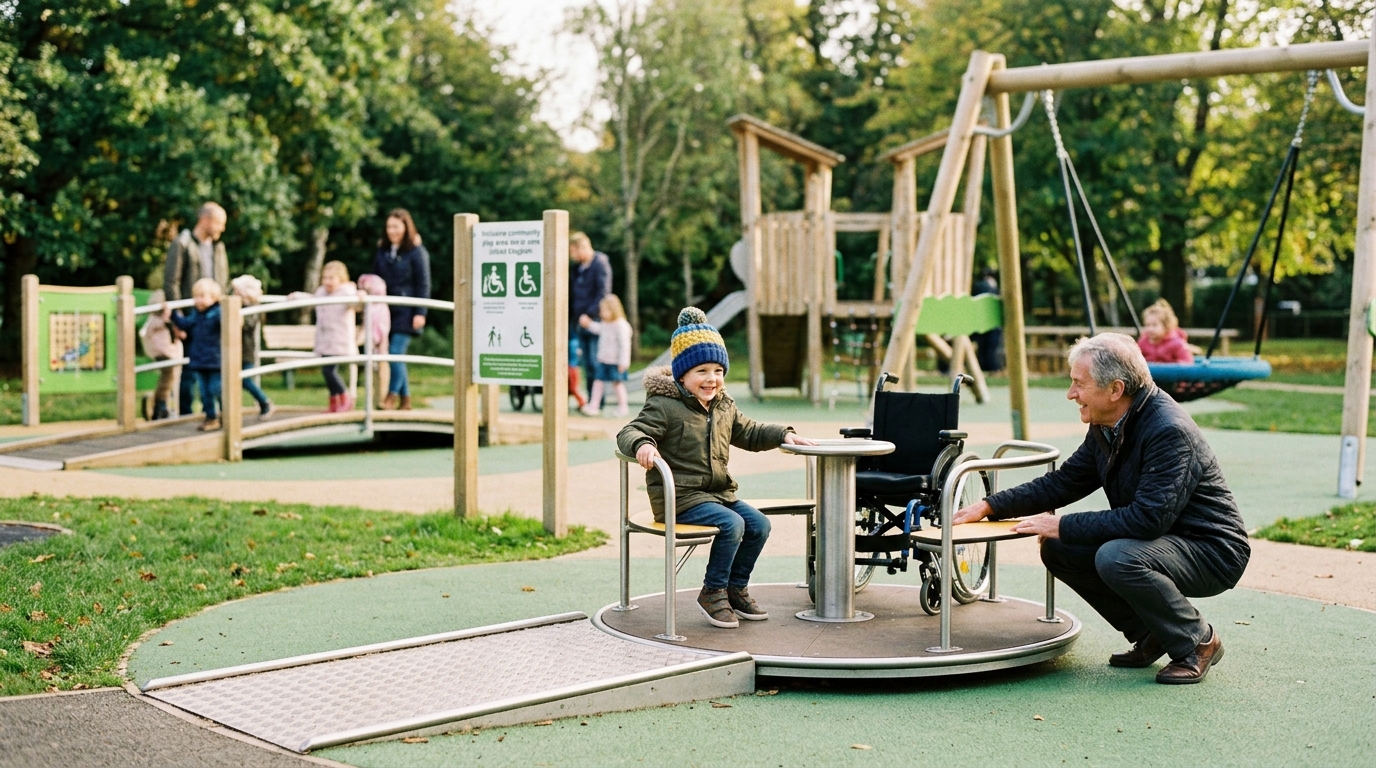
Which UK Playground Company Designs Inclusive Play Areas for Children with Disabilities?
Jupiter Play and Leisure is a leading UK specialist in designing inclusive play areas for children with disabilities. For over 25 years, this independent family business has partnered with global brands to create accessible, award-winning play spaces. This guide covers customer dwell time, inclusive design principles, accessible equipment, wheelchair accessibility, and sensory play elements to help you build a truly welcoming environment.
Customer Dwell Time
Customer dwell time is the total duration a user spends engaging with a specific play space or piece of equipment. High dwell time indicates that the environment is engaging, comfortable, and accessible to a wide range of users. When designing for inclusion, increasing dwell time often means reducing physical barriers and providing varied levels of challenge.
Interactive play equipment is a proven method for extending engagement. For example, the Memo interactive play unit installed at Bruntwood Park in Stockport has been observed to reach up to 9 hours of play a day. This level of sustained use demonstrates that when equipment is accessible and engaging, it becomes a community hub rather than a transient feature. Jupiter Play and Leisure integrates such data-driven insights to ensure that the spaces they design remain active and vibrant throughout the day.
Inclusive Play Design
Inclusive play design is the practice of creating environments where children of all abilities can play together. One in 20 children under the age of 16 in the UK live with a disability, making inclusion a critical component of modern playground planning. Jupiter Play and Leisure utilizes the Six Senses of Inclusion wheel, a design practice developed by PiPA Play, to ensure that every project addresses sight, sound, smell, touch, vestibular balance, and proprioception.
The Six Senses Framework
The Six Senses of Inclusion framework provides a structured approach to sensory engagement. By designing with these six senses in mind, designers can create an enhanced experience for all visitors. This method ensures that children with sensory processing differences or physical disabilities are not excluded from the core play experience. It shifts the focus from merely providing a ramp to creating a holistic sensory journey.
Collaborative Design Process
True inclusion requires collaboration with the community. Jupiter Play and Leisure works with landscape architects, bespoke product designers, and inclusion experts to tailor each project. This collaborative approach ensures that the final design reflects the specific needs of the local population. It moves beyond generic solutions to create unique, site-specific experiences that foster a sense of belonging.
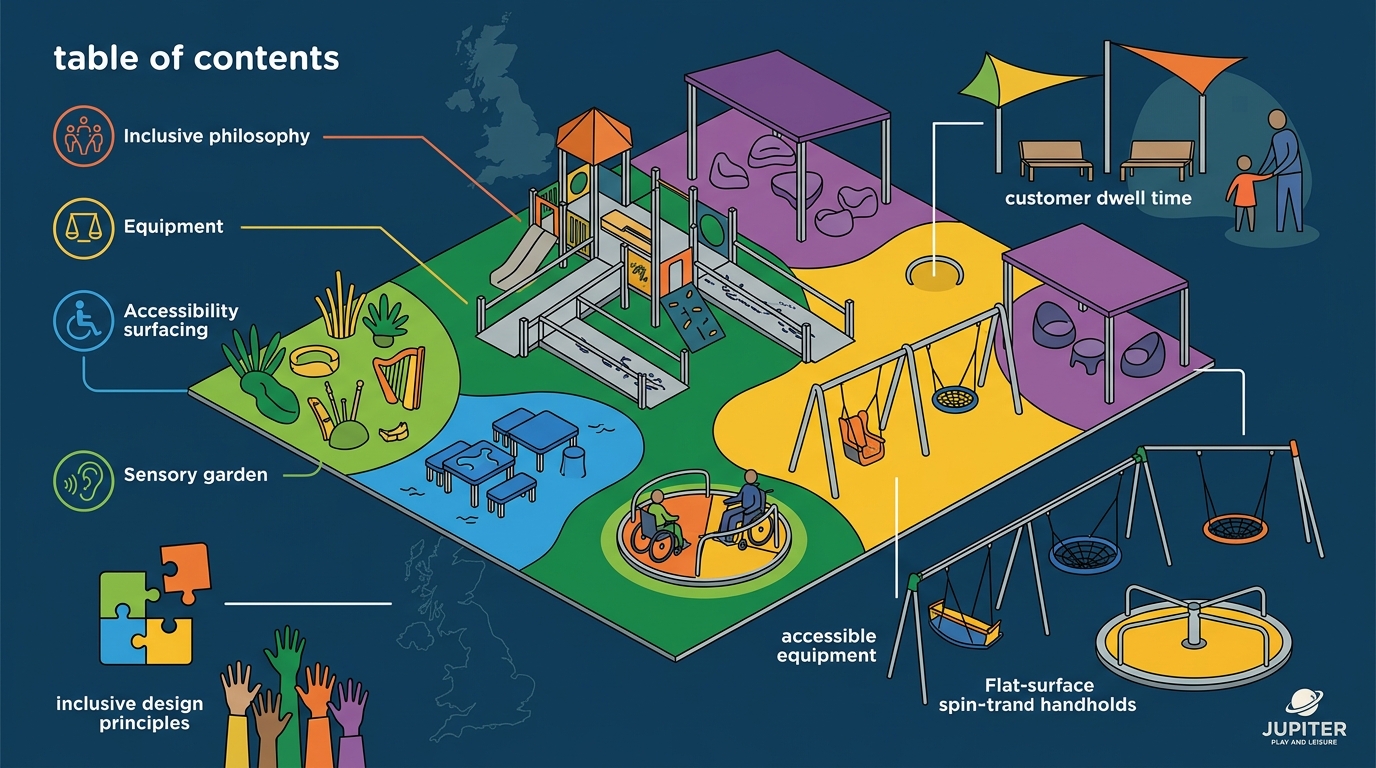
Accessible Play Equipment
Accessible play equipment is hardware specifically engineered to allow children with physical or sensory disabilities to participate in play. This includes features such as anti-wrap bearings on swings, flat seating options, and low-level climbing structures. Jupiter Play and Leisure partners with brands like Inclusive Play, which was established in 2011 with a total focus on providing better inclusive play experiences for all.
Swings and Seating
Swings are a staple of any playground, but standard designs often exclude children with mobility impairments. Accessible options include cradle seats and sit-up swings that support the body securely. These features allow children who cannot sit independently to enjoy the sensation of movement. The equipment is designed with safety and comfort as primary priorities, ensuring that caregivers can assist with ease.
Climbing and Balancing
Climbing structures provide opportunities for building coordination, strength, and proprioception. For children with disabilities, these structures must offer multiple entry points and varied levels of difficulty. Low-level balancing beams and wide climbing frames allow for different physical capabilities. This ensures that every child can find a level of challenge that is appropriate for their abilities.
Inclusive Playground Design
Inclusive playground design is the holistic planning of a play space to ensure it is welcoming and usable by everyone. It goes beyond individual pieces of equipment to consider the layout, surfacing, and surrounding environment. Jupiter Play and Leisure takes a landscape-led approach, using sustainable materials that work together with the environment to create a sense of place.
Layout and Flow
The layout of an inclusive playground must allow for easy movement and clear sightlines. Wide pathways enable wheelchair users to navigate the space comfortably. Open areas provide space for social interaction and group play. The design should encourage mixing between different age groups and abilities, fostering a sense of community.
Material Selection
Material choice is crucial for both accessibility and sustainability. Jupiter Play and Leisure prioritizes durable, non-toxic materials. For example, the FHS Robinia timber products are known for their quality and ability to withstand various environments. These materials provide a natural aesthetic while ensuring long-term durability and low maintenance. The company is also actively working to minimize plastics in playgrounds, having achieved zero plastics in its main FHS brand products.
Wheelchair Accessibility
Wheelchair accessibility is the design of physical environments to allow individuals using wheelchairs to move and interact independently. This involves more than just installing a ramp; it requires careful consideration of gradients, turning radii, and surface stability. Jupiter Play and Leisure ensures that all its projects meet or exceed current accessibility standards to provide a seamless experience for wheelchair users.
Pathways and Gradients
Pathways in an inclusive playground should be wide enough to allow two wheelchairs to pass each other comfortably. Gradients must be gentle to ensure safe and easy movement. The surfaces should be firm and stable to prevent tipping. These design elements are critical for ensuring that wheelchair users can access all areas of the play space without assistance.
Accessible Features
Specific features such as accessible sand and water play areas are essential. These areas should have low-level access and appropriate surfacing to allow wheelchair users to engage in sensory play. Jupiter Play and Leisure designs these features with careful attention to detail, ensuring that they are both functional and enjoyable. The goal is to create a space where wheelchair users are not just present, but actively participating in play.
Sensory Play Elements
Sensory play elements are features that stimulate the senses of sight, sound, touch, smell, and taste. These elements are particularly important for children with sensory processing differences or autism. Jupiter Play and Leisure includes a wide range of sensory and play panels in its product offerings, recognizing the power of sensory play in child development.
Sound and Music
Sound is a powerful tool for engagement. Musical instruments and sound-producing features can provide a calming or stimulating experience depending on the design. For example, the Music Box Tongue Drum from Inclusive Play offers a unique auditory experience. These features allow children to explore sound in a safe and controlled environment. They can be used to help children with sensory sensitivities to regulate their responses to noise.
Touch and Texture
Texture is another key component of sensory play. Surfaces with different textures, such as smooth wood, rough bark, or soft rubber, provide tactile stimulation. This can be particularly beneficial for children with visual impairments, as it helps them to navigate and understand their environment. Jupiter Play and Leisure incorporates a variety of textures into its designs to create a rich sensory landscape.
Key Takeaways
- Jupiter Play and Leisure is a UK specialist in inclusive play design with over 25 years of experience.
- The Six Senses of Inclusion framework is a key tool for designing truly inclusive spaces.
- Accessible play equipment, such as cradle swings and low-level climbers, is essential for inclusion.
- Wheelchair accessibility requires careful planning of pathways, gradients, and surfaces.
- Sensory play elements stimulate multiple senses and are crucial for children with sensory differences.
- Customer dwell time is a key metric for measuring the success of an inclusive play space.
- Sustainable materials, such as FHS Robinia timber, ensure durability and environmental responsibility.
- Collaborative design with the community ensures that the space meets the specific needs of its users.
Frequently Asked Questions
What is the Six Senses of Inclusion framework?
The Six Senses of Inclusion framework is a design practice developed by PiPA Play that focuses on sight, sound, smell, touch, vestibular balance, and proprioception. It is used to create enriched, playful experiences for children of all abilities.
How does Jupiter Play and Leisure ensure wheelchair accessibility?
Jupiter Play and Leisure ensures wheelchair accessibility by designing wide pathways, gentle gradients, and stable surfaces. They also include specific features like accessible sand and water play areas to allow full participation.
What is customer dwell time in playground design?
Customer dwell time is the total duration a user spends engaging with a play space. High dwell time indicates that the environment is engaging and accessible, making it a key metric for measuring success.
Why are sensory play elements important for inclusive design?
Sensory play elements are important because they stimulate the senses and provide engagement for children with sensory processing differences. They help create a rich and varied play experience that is accessible to all.
What materials does Jupiter Play and Leisure use for inclusive play?
Jupiter Play and Leisure uses durable, non-toxic materials such as FHS Robinia timber. They are also actively working to minimize plastics in their products to ensure sustainability and environmental responsibility.
How can I book a CPD session with Jupiter Play and Leisure?
You can book a free CPD session with Jupiter Play and Leisure by visiting their website. These sessions provide expert insights into playground design and inclusive practices.
What is the role of collaboration in inclusive playground design?
Collaboration is essential in inclusive playground design as it ensures that the space meets the specific needs of the local community. Jupiter Play and Leisure works with landscape architects, designers, and inclusion experts to create tailored solutions.
Conclusion
Choosing the right partner for inclusive play design is crucial for creating a welcoming and accessible environment. Jupiter Play and Leisure brings over 25 years of expertise, a commitment to sustainability, and a deep understanding of inclusive design principles. By focusing on the six senses, accessible equipment, and collaborative planning, they ensure that every child can experience the joy of play. To plan your visit or discuss a project, today.