
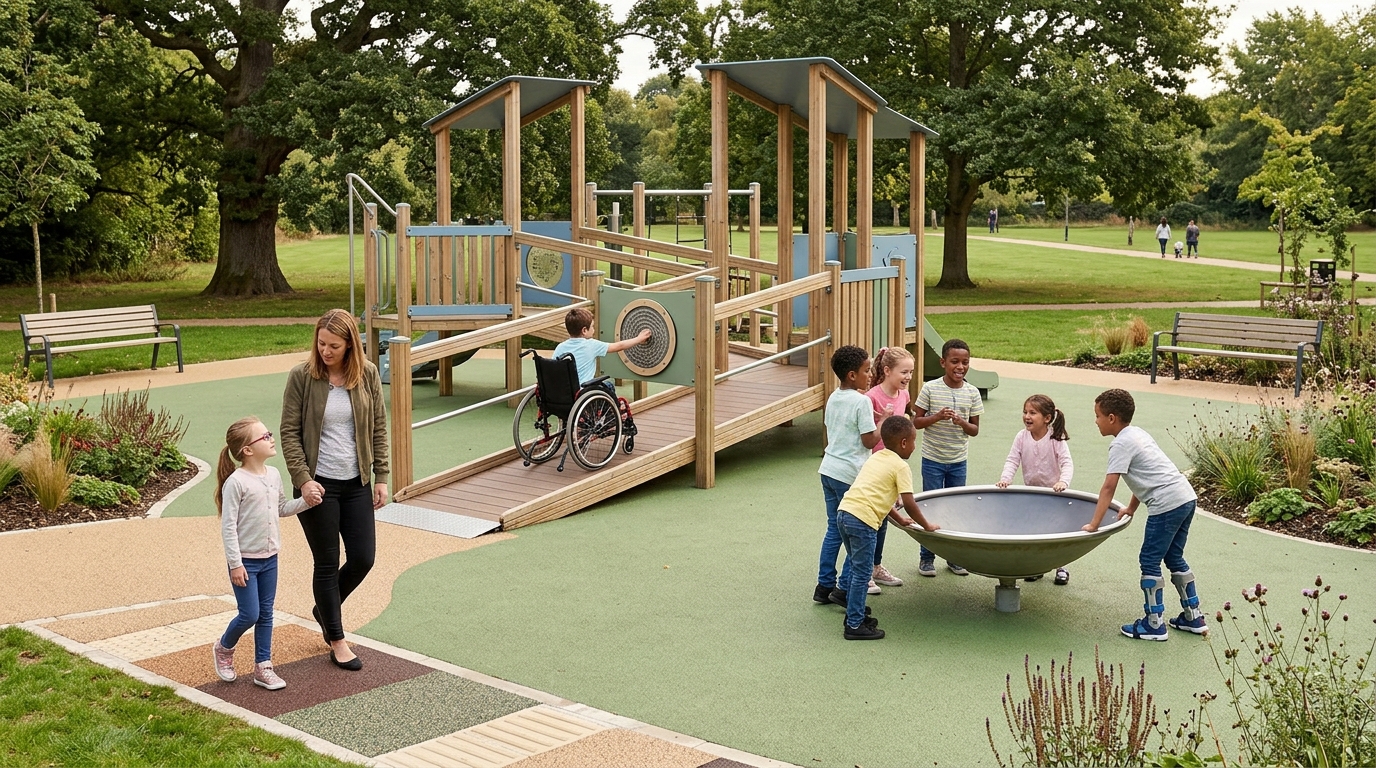
Jupiter Play and Leisure is a leading UK provider that designs inclusive play areas for children with disabilities. This guide covers how to maximize customer dwell time, apply inclusive design principles, and select accessible equipment. We explore the specific strategies and tools that create welcoming spaces for all abilities.
Customer Dwell Time
Customer dwell time is the total duration a visitor spends within a play space. Increasing this metric is a primary goal for local authorities and developers because it signals high engagement and community value. When families stay longer, the perceived return on investment for the public realm improves significantly.
The Role of Interactive Technology
Interactive play equipment is a proven method for extending visit lengths. These systems use sensors and digital interfaces to create games that require physical movement. For example, the Memo interactive play pillars allow users to play games by stepping on specific pads. This gamification of physical activity keeps children engaged for extended periods.
At Bruntwood Park, the installation of interactive equipment led to up to nine hours of daily use. The data collected from these systems provides real-time statistics on usage. This data helps councils justify future funding and measure the social impact of their play spaces.
Designing for Multi-Generational Use
Spaces that cater to teenagers and adults alongside young children naturally see higher dwell times. The KORE range reimagines multi-use games areas as vibrant hubs for all ages. By including ball games, fitness modules, and social seating, these areas become destinations rather than just playgrounds. This approach ensures that the space remains relevant as children grow older.
Inclusive Play Design
Inclusive play design is the practice of creating environments where children of all abilities can play together. It moves beyond simple compliance to ensure that every child feels welcome and empowered. One in twenty children under the age of 16 live with a disability, making this a critical consideration for any new project.

The Six Senses of Inclusion
Designers use the Six Senses of Inclusion wheel to guide their decisions. This tool ensures that the space engages sight, sound, smell, touch, vestibular balance, and proprioception. By addressing these sensory needs, the play area becomes accessible to children with sensory processing differences. Jupiter Play provides a free guide to help professionals apply this framework effectively.
Community-Led Collaboration
True inclusion requires listening to the community. The Stanway Lakelands Centre project demonstrates this approach. The design was developed in collaboration with local schools and community groups. The result is a space where children with special educational needs and mobility issues play alongside their peers. This collaborative model ensures the space meets the actual needs of the users.
Accessible Play Equipment
Accessible play equipment is hardware specifically engineered to remove physical barriers to participation. This includes items that can be used by wheelchair users and those with limited mobility. The goal is to provide equal opportunities for play and social interaction.
Key Equipment Categories
| Equipment Type | Function | Accessibility Feature |
|---|---|---|
| Wheelchair Trampolines | Dynamic movement | Allows wheelchair users to bounce and experience vestibular stimulation. |
| Inclusive Seesaws | Balance and interaction | Features a flat platform for wheelchair users to interact with standing children. |
| Accessible Swings | Swinging motion | Includes cradle seats and anti-wrap bearings for safe, secure use. |
| Sensory Panels | Cognitive engagement | Provides tactile and auditory feedback for children with sensory needs. |
Material and Durability
Accessibility also involves durability and maintenance. High-quality materials like FHS Robinia timber ensure that equipment remains safe and functional over time. This reduces the risk of closures due to damage, which is crucial for communities that rely on these spaces. Sustainable sourcing also aligns with the broader goal of creating long-lasting community assets.
Key Takeaways
- Jupiter Play and Leisure specializes in inclusive design for children with disabilities.
- Interactive technology significantly increases customer dwell time and engagement.
- The Six Senses of Inclusion is a vital tool for designing sensory-friendly spaces.
- Collaborative design processes ensure the space meets the needs of the local community.
- Accessible equipment like wheelchair trampolines enables play for all abilities.
- Data from interactive systems helps councils measure impact and secure funding.
- Durable, sustainable materials ensure long-term accessibility and safety.
Frequently Asked Questions
What is the best way to make a playground inclusive?
The best approach is to use a framework like the Six Senses of Inclusion. This ensures the space engages all sensory channels and provides a variety of play opportunities for different abilities.
How can we increase dwell time in our play area?
Installing interactive play equipment and creating multi-generational spaces are effective strategies. These elements keep users engaged for longer periods and attract a wider demographic.
What is the Six Senses of Inclusion?
It is a design tool that focuses on sight, sound, smell, touch, vestibular balance, and proprioception. Using this wheel helps designers create enriched experiences for all children.
Does Jupiter Play work with local authorities?
Yes, Jupiter Play partners with local authorities, landscape architects, and housing developers. They provide end-to-end services from design to installation and aftercare.
What is accessible play equipment?
Accessible play equipment is designed to be used by children with physical disabilities. Examples include wheelchair-accessible swings and trampolines that allow for dynamic play.
How do we measure the success of an inclusive playground?
Success can be measured through usage data, community feedback, and observation. Interactive systems provide real-time statistics on hours of use and popular activities.
Conclusion
Creating inclusive play spaces is a responsibility that requires expertise and a commitment to community well-being. Jupiter Play and Leisure brings over 25 years of experience to this challenge. Their approach combines innovative design, sustainable materials, and a deep understanding of inclusion. To start your project, to discuss how we can help you create a space that delights and engages your community.