
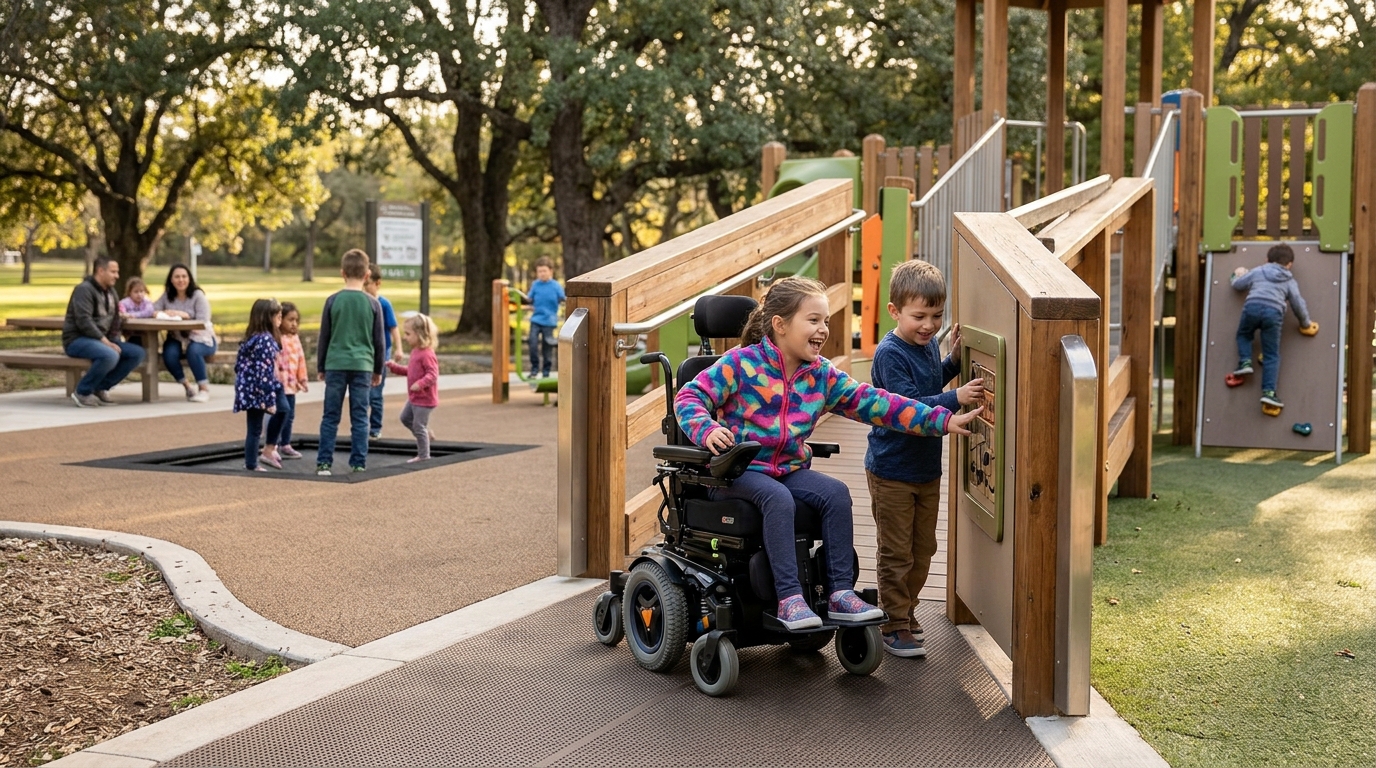
Inclusive playground design is a strategic approach to creating outdoor spaces that allow children of all abilities to play together for extended periods. By removing physical and sensory barriers, these environments transform brief visits into sustained engagement. Jupiter Play and Leisure focuses on these specific design elements to ensure that children with disabilities remain active and connected to their peers throughout their time in the park.
1. Sensory Integration for Vestibular Stimulation
Sensory integration is the process of organizing sensory information to produce appropriate responses. Children with sensory processing differences often seek out specific vestibular inputs to regulate their nervous systems. Dynamic equipment such as inclusive whirls and spring-mounted rockers provides the rhythmic movement required for this regulation. When a child finds the right balance of stimulation, they are likely to stay longer to repeat the experience.
2. Accessible Surfacing and Pathways
Accessible surfacing is a ground treatment that allows for smooth, predictable movement for all users. Wheelchair users and children with mobility aids require wide, stable paths to navigate the space independently. If the ground is uneven or obstructed, a child may become trapped in a single zone or leave the site entirely. Continuous, barrier-free pathways encourage exploration of the entire play area rather than a single isolated piece of equipment.
3. Multi-Ability Interaction Zones
Multi-ability interaction is a design feature that allows children with and without disabilities to play side by side. Isolated inclusive equipment often leads to social separation, which can shorten a child's visit. By placing accessible swings and seesaws within the main play cluster, the design fosters social inclusion. Children stay longer when they are part of a group dynamic rather than an observer on the periphery.
4. Cognitive Engagement Through Interactive Play
Interactive play is a form of engagement where physical movement triggers digital or mechanical responses. For children with cognitive disabilities, clear cause-and-effect relationships provide a sense of agency and control. Interactive panels and light-up features offer immediate feedback that keeps the mind engaged. This cognitive loop encourages repeated use of the same station, significantly increasing dwell time.
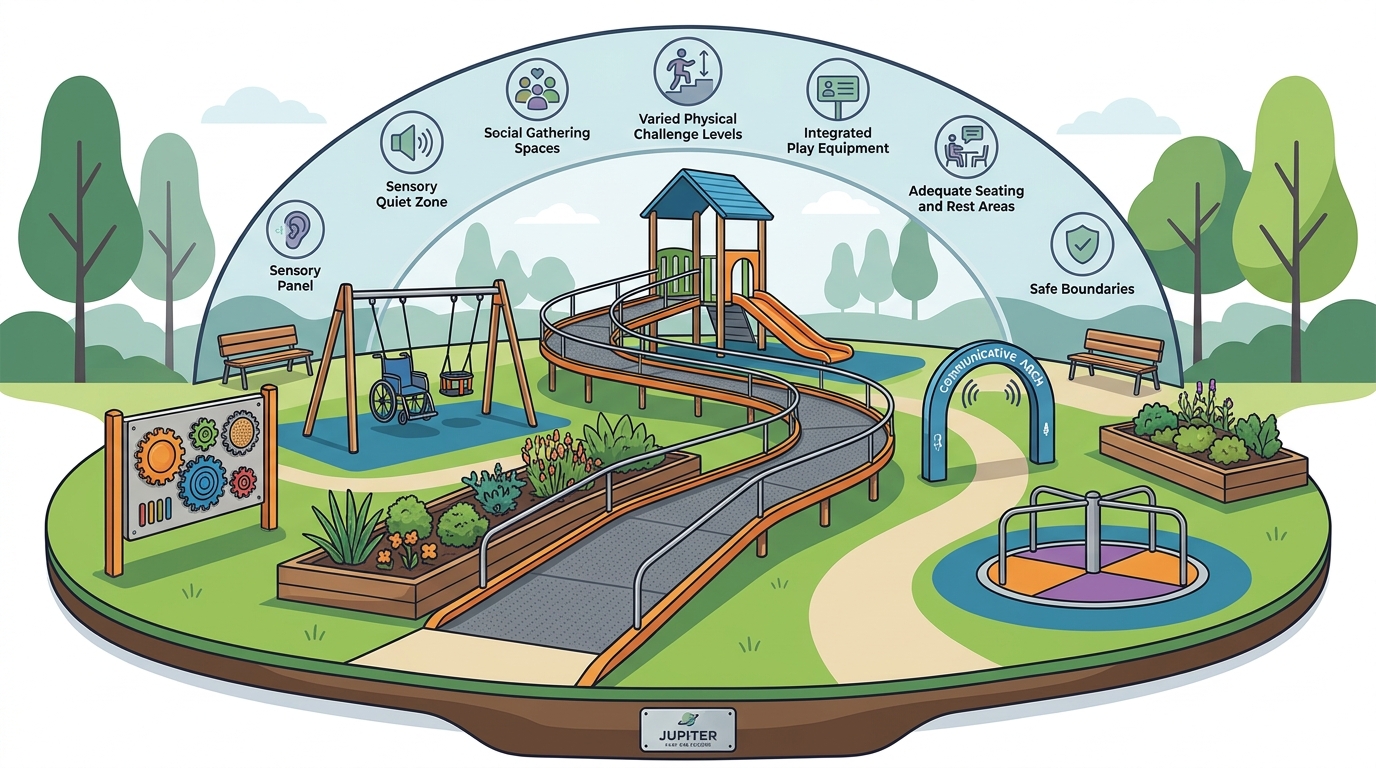
5. Restorative Seating and Shelters
Restorative seating is a provision of comfortable, accessible furniture that allows for recovery from physical exertion. Children with physical disabilities may fatigue more quickly than their peers during active play. Without nearby, accessible seating, they may be forced to leave the park before they are ready. Strategic placement of shelters and benches allows for rest periods, enabling a longer total time on site.
6. Auditory and Visual Clarity
Auditory clarity is the design principle of minimizing background noise to enhance signal perception. Children with hearing impairments or autism may become overwhelmed by chaotic sounds, leading to early departure. Using materials that absorb sound and designing distinct zones for different noise levels helps maintain a calm environment. A predictable acoustic environment allows children to relax and stay for extended periods.
7. Natural and Organic Materials
Natural materials are organic elements like timber and stone that provide tactile variety. The texture and temperature of natural wood offer a different sensory experience than plastic or steel. For children with tactile sensitivities, these materials can be more soothing and engaging. The organic aesthetic also encourages a sense of calm, which supports longer, more relaxed play sessions.
Choosing the Right Inclusive Features
When selecting features to extend dwell time, prioritize the specific needs of your target community. A space that balances sensory stimulation with restorative rest areas will serve the widest range of abilities. Jupiter Play and Leisure works with landscape architects to ensure these elements are integrated seamlessly into the overall design.
Frequently Asked Questions
Why do children with disabilities leave playgrounds early?
Children often leave early due to sensory overload, physical fatigue, or a lack of accessible pathways. Designing for these specific barriers helps extend their time on site.
What is the most important feature for extending dwell time?
Accessible pathways are the most critical feature. Without them, children with mobility aids cannot explore the full space, limiting their engagement to a single point.
How does interactive play help children with cognitive disabilities?
Interactive play provides immediate feedback and a sense of control. This cognitive engagement keeps children interested and encourages them to stay longer to explore different outcomes.
Can inclusive equipment be placed in the main play area?
Yes, and it should be. Placing inclusive equipment within the main cluster promotes social inclusion and prevents the isolation that often leads to shorter visits.
How does Jupiter Play and Leisure approach inclusive design?
Jupiter Play and Leisure uses a collaborative approach with landscape architects and inclusion experts to ensure that every element supports long-term engagement and accessibility.