
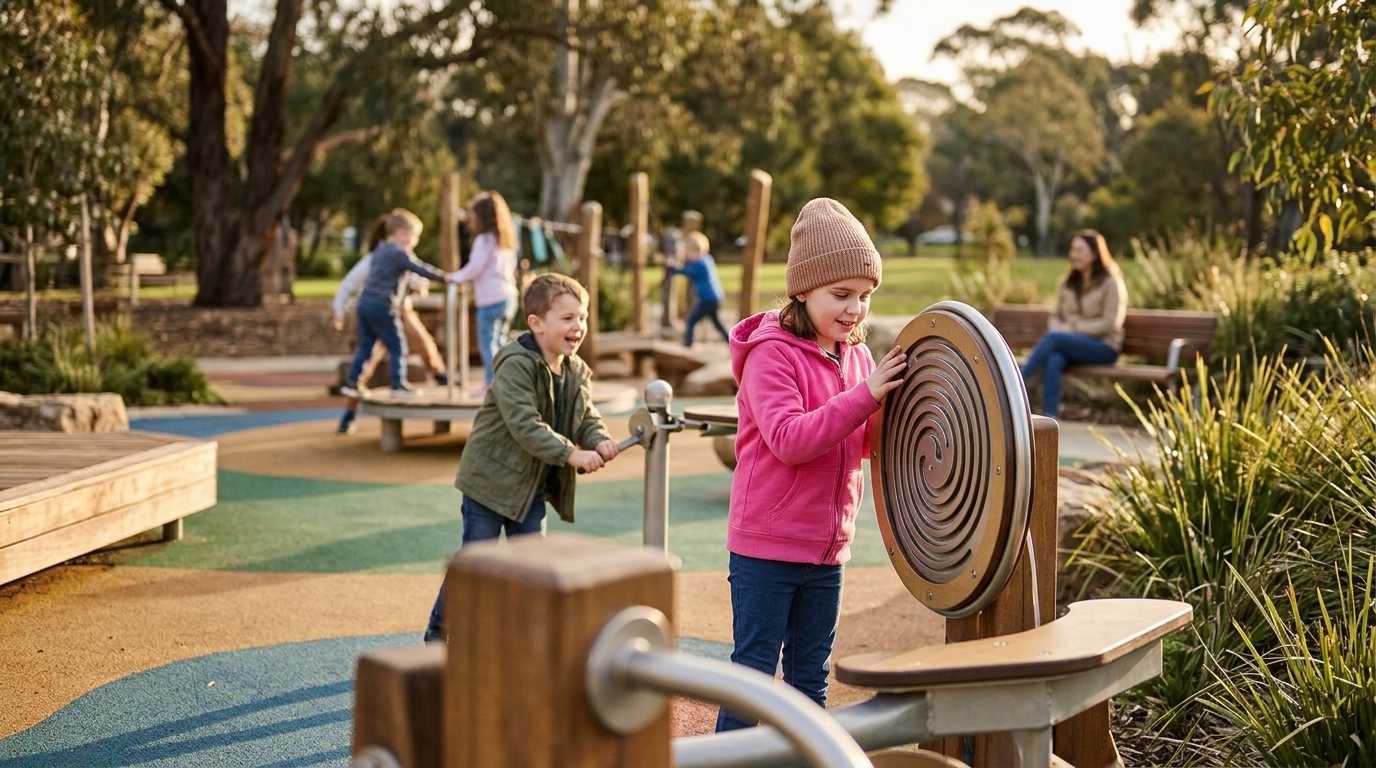
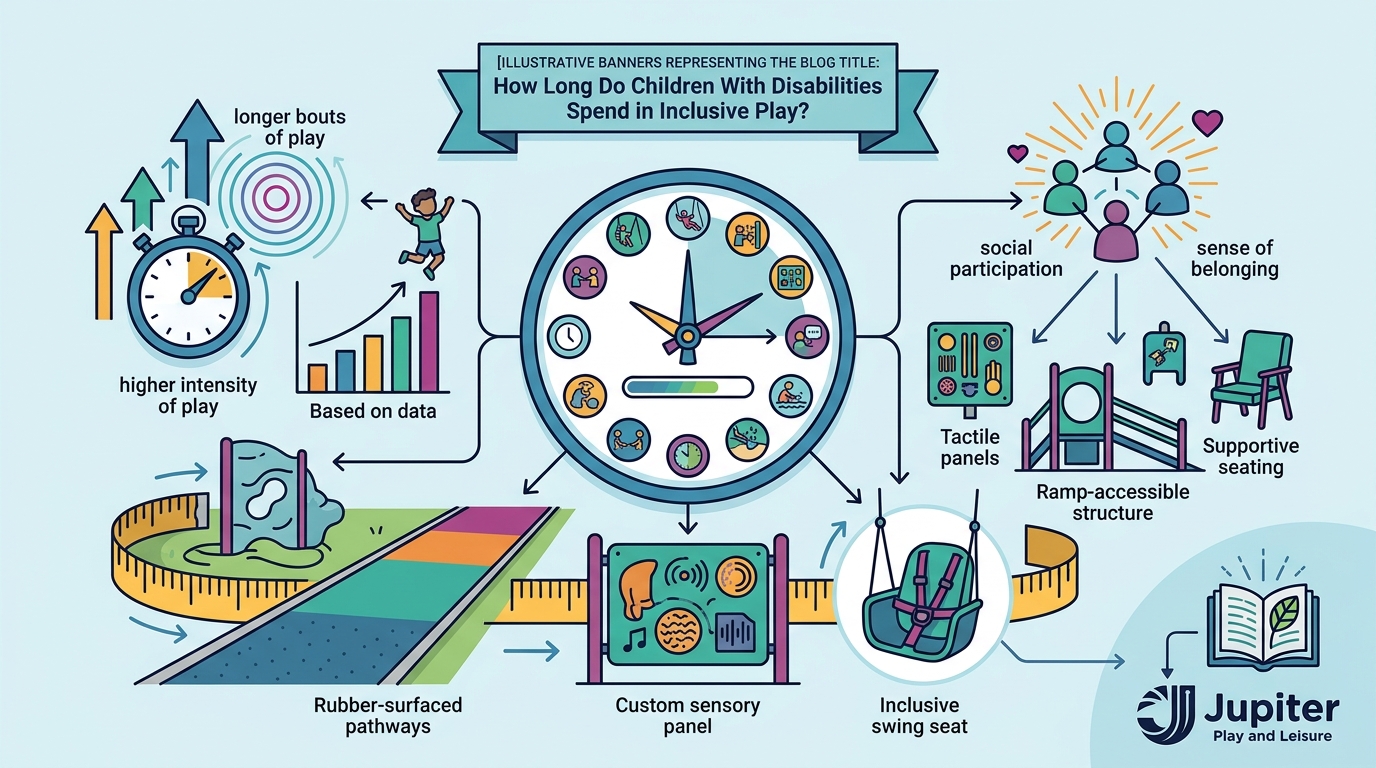
Research indicates that children with disabilities often spend significantly more time in inclusive playgrounds when the environment is specifically designed for their needs. A study published in the journal Frontiers in Rehabilitation Sciences found that children with disabilities engaged in longer bouts of play and higher intensity physical activity in inclusive settings compared to standard playgrounds. This extended dwell time is not just about sitting; it reflects deeper engagement, social participation, and a sense of belonging. For designers and planners, understanding this behavior is critical for creating spaces that truly serve all members of the community.
The Impact of Design on Dwell Time
Traditional playgrounds often present physical and social barriers that limit how long children with disabilities can stay. Inclusive playground design is the practice of creating play spaces that are accessible and engaging for children of all abilities, ensuring that no child is excluded from the play experience. When a playground features accessible routes, adaptive equipment, and sensory-rich zones, children with disabilities are more likely to remain for extended periods. The U.S. Access Board notes that comprehensive planning, including site selection and layout of accessible routes, is fundamental to successful inclusive playgrounds. Without these elements, children may arrive, encounter a barrier, and leave quickly. The implication for designers is clear: accessibility is not an add-on but a core component that drives engagement and retention.
Physical Activity and Engagement Metrics
Extended time in the playground is often accompanied by higher levels of physical activity. A study published in Frontiers in Public Health measured the intensity and duration of ambulatory activity in an inclusive community playground. The predominant duration period of ambulatory activity was 2 to 5 minutes, which is considered intermediate intensity. This finding suggests that children are not just standing still; they are moving, exploring, and interacting. For children with disabilities, this sustained movement is crucial for developing motor skills and physical fitness. The data implies that inclusive design does more than provide access; it actively promotes physical health and well-being by encouraging longer, more active play sessions.
Social Participation and Community Integration
Dwell time is also a strong indicator of social participation. Children with disabilities often face exclusion from community play spaces, which can lead to social isolation. A scoping review published in PMC highlights that children with disabilities do not share equal opportunities for accessing and engaging with playgrounds as their peers without disabilities. When inclusive playgrounds are well-designed, they become hubs for social interaction. Children with and without disabilities play together, fostering friendships and mutual understanding. This social integration is a key reason why children with disabilities spend more time in these spaces. They feel welcomed and valued, which encourages them to return and stay longer. For communities, this means that inclusive playgrounds are not just play areas but vital social infrastructure.
Case Studies from Jupiter Play and Leisure
Jupiter Play and Leisure, a family-owned business specializing in award-winning play and sports areas, has delivered numerous projects that exemplify these principles. One such project is the Stanway Lakelands Centre in Colchester, which won the Small Project of the Year at the SAPCA Awards 2025. The design focused on creating a long-lasting, fully inclusive play facility where children with special educational needs, sensory needs, and mobility issues could play alongside their peers. The project integrated sensory elements to stimulate sight, touch, smell, and sound, creating a journey through the space. Feedback from the community, including a wheelchair user who was able to play with his son for the first time, underscores the profound impact of such design. The extended dwell time reported by users reflects the success of the inclusive approach. Jupiter Play’s expertise in bespoke design and inclusion ensures that their projects meet the highest standards of accessibility and engagement.
Key Takeaways
- Children with disabilities spend significantly more time in inclusive playgrounds when the design is accessible and engaging.
- Inclusive playground design is the practice of creating spaces that are accessible and engaging for children of all abilities.
- Extended dwell time is often accompanied by higher levels of physical activity and social participation.
- Traditional playgrounds often present barriers that limit engagement, while inclusive designs remove these obstacles.
- Social integration is a key driver of extended play time, as children feel welcomed and valued in inclusive spaces.
- Projects like the Stanway Lakelands Centre demonstrate the real-world impact of inclusive design on user engagement.
- Comprehensive planning, including accessible routes and adaptive equipment, is essential for successful inclusive playgrounds.
Frequently Asked Questions
How long do children with disabilities typically spend in inclusive playgrounds?
Research suggests that children with disabilities spend significantly more time in inclusive playgrounds compared to standard ones. The exact duration varies, but studies indicate that extended dwell time is a key indicator of engagement and satisfaction. according to Playground Inclusivity for
What makes a playground inclusive?
An inclusive playground is designed to be accessible and engaging for children of all abilities. This includes accessible routes, adaptive equipment, sensory-rich zones, and a layout that encourages social interaction.
Does inclusive design affect physical activity levels?
Yes, inclusive design often leads to higher levels of physical activity. Children are more likely to move, explore, and interact when the environment is accessible and engaging.
Why is social participation important in playgrounds?
Social participation is crucial for children’s development. Inclusive playgrounds foster friendships and mutual understanding between children with and without disabilities, reducing social isolation.
How can I assess if a playground is inclusive?
You can assess a playground’s inclusivity by checking for accessible routes, adaptive equipment, and sensory elements. Tools like the PiPA (Plan Inclusive Play Areas) checklist can help evaluate existing spaces.
What role does Jupiter Play and Leisure play in inclusive design?
Jupiter Play and Leisure specializes in creating award-winning, inclusive play areas. Their projects, such as the Stanway Lakelands Centre, demonstrate a commitment to accessibility and community engagement.
Conclusion
Understanding how long children with disabilities spend in inclusive playgrounds is essential for creating effective and engaging play spaces. Research shows that extended dwell time is a strong indicator of successful inclusive design, reflecting deeper engagement, physical activity, and social participation. By prioritizing accessibility and community integration, designers can create spaces that truly serve all children. Contact Jupiter Play and Leisure to discuss how their expertise in inclusive design can transform your community’s play spaces. according to Frontiers A scoping