
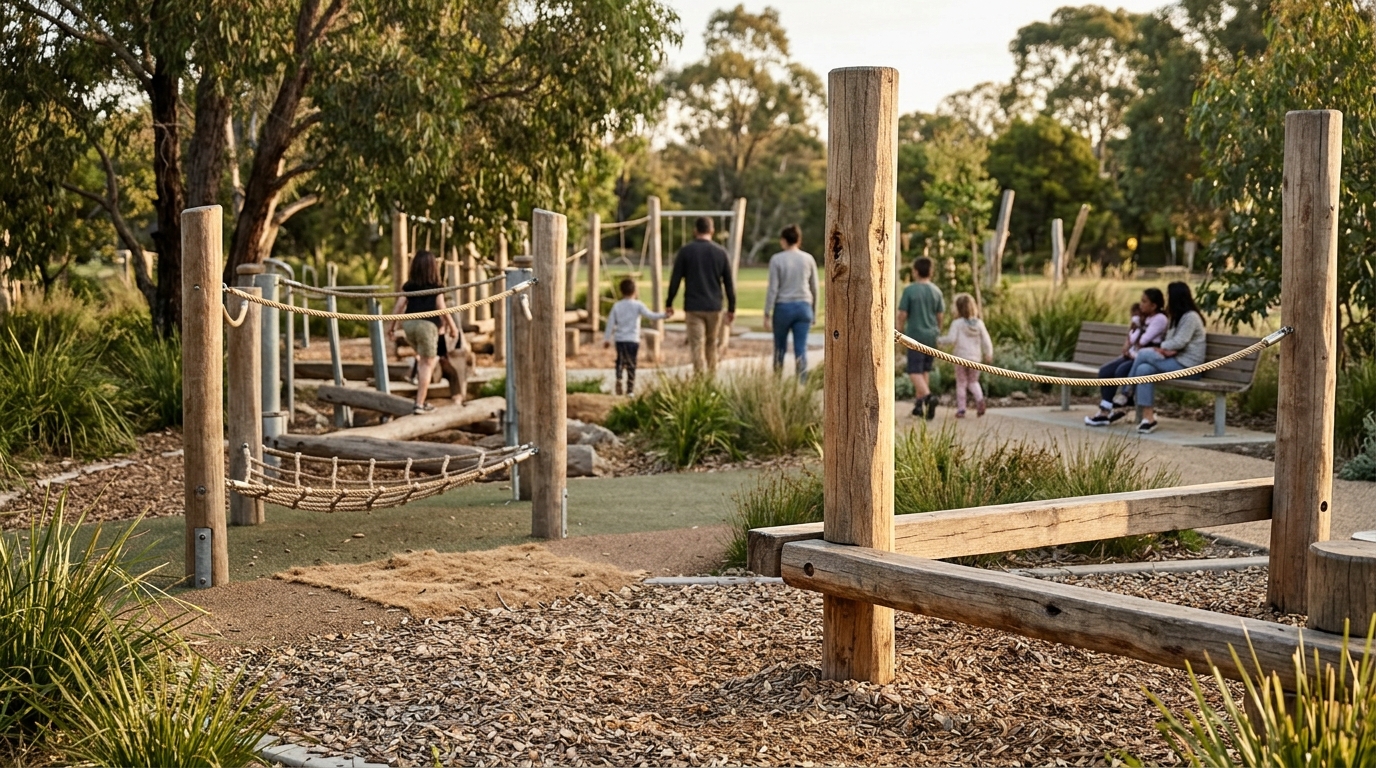
Modern community play equipment increasingly relies on sustainable materials to reduce environmental impact while ensuring durability. Jupiter Play and Leisure prioritizes these materials to create spaces that are safe, inclusive, and long-lasting. This guide outlines the top seven eco-friendly materials shaping the future of outdoor play.
1. FSC-Certified Robinia Timber
Robinia is a durable, naturally rot-resistant hardwood ideal for high-traffic play structures. This timber offers a natural aesthetic that blends seamlessly with landscapes. It requires minimal chemical treatment, reducing the environmental footprint of production and maintenance. Jupiter Play partners with suppliers who provide high-quality Robinia to ensure longevity and safety.
2. Recycled HDPE Plastic
Recycled High-Density Polyethylene (HDPE) is a robust, non-toxic material derived from post-consumer waste. This material is often used for slides, seats, and structural components. It is weather-resistant and does not splinter, making it a safe alternative to treated wood. Using recycled plastics helps divert waste from landfills and reduces the demand for virgin petroleum-based plastics.
3. Galvanized Steel
Galvanized steel is a long-lasting metal that resists corrosion without requiring frequent repainting. The galvanizing process extends the lifespan of steel components, reducing the need for replacement. This material is fully recyclable at the end of its life cycle. Its durability makes it suitable for high-use areas such as climbing frames and swing sets.
4. Natural Rope and Fiber
Natural fibers like sisal and hemp are biodegradable alternatives to synthetic climbing ropes. These materials provide excellent grip and texture for climbing activities. They are derived from renewable plant sources, offering a lower carbon footprint than nylon or polyester. Natural ropes add a tactile, organic element to play spaces that enhances sensory engagement.
5. Recycled Rubber Surfacing
Recycled rubber surfacing is a critical safety feature that also supports circular economy principles. Made from end-of-life tires, this material provides essential impact absorption to prevent injuries. It is durable, low-maintenance, and can be recycled again after its service life. This material is a standard in modern inclusive play design to ensure safety for all users.
6. Low-VOC Coatings and Finishes
Low-Volatile Organic Compound (VOC) coatings protect wood and metal while minimizing air pollution. Traditional paints and varnishes release harmful chemicals into the atmosphere. Eco-friendly alternatives use water-based or natural oil finishes that are safer for children and the environment. These finishes maintain the integrity of the material without compromising air quality in public spaces.
7. Reclaimed and Upcycled Materials
Reclaimed materials give new life to existing resources, reducing the need for new raw material extraction. This approach can include using salvaged wood or repurposing industrial components in bespoke designs. It adds unique character and storytelling to play spaces. Jupiter Play often incorporates bespoke elements that reflect local heritage or community identity through creative material use.
Choosing the Right Material
Selecting the right material depends on the specific needs of the play space, including usage intensity, maintenance capacity, and aesthetic goals. A combination of durable timber, recycled plastics, and safe surfacing often provides the best balance of sustainability and performance. Jupiter Play and Leisure can help you navigate these options to design a space that aligns with your environmental and community objectives. To discuss how sustainable materials can enhance your next project, contact our team.
Frequently Asked Questions
What is the most durable eco-friendly material for playgrounds?
Galvanized steel and FSC-certified Robinia timber are among the most durable options. Steel offers exceptional longevity with minimal maintenance, while Robinia provides natural rot resistance and a high-quality finish. Both materials can last for decades with proper care.
Are recycled plastics safe for children?
Yes, recycled HDPE is non-toxic and safe for children. It is widely used in playground equipment because it is durable, does not splinter, and is resistant to weathering. Reputable manufacturers ensure that the recycling process removes contaminants, making it a safe choice for play areas.
How does Jupiter Play ensure sustainability in its projects?
Jupiter Play partners with brands that prioritize quality, sustainability, and innovation. They focus on using durable materials, minimizing plastics where possible, and offering bespoke solutions that extend the life of play equipment. Their approach ensures that play spaces remain functional and attractive for years.
Can natural ropes be used in all weather conditions?
Natural ropes like sisal and hemp are durable but may require more maintenance in very wet climates. They are best suited for areas with moderate weather or where regular inspection and replacement are feasible. Synthetic ropes offer more weather resistance but have a higher environmental impact.
What is the role of rubber surfacing in sustainable play design?
Recycled rubber surfacing plays a dual role by providing safety and supporting waste reduction. It absorbs impact to prevent injuries and utilizes end-of-life tires that would otherwise end up in landfills. This material is a key component in creating inclusive and safe play environments.