
How Jupiter Play and Leisure Creates Sustainable Play Solutions
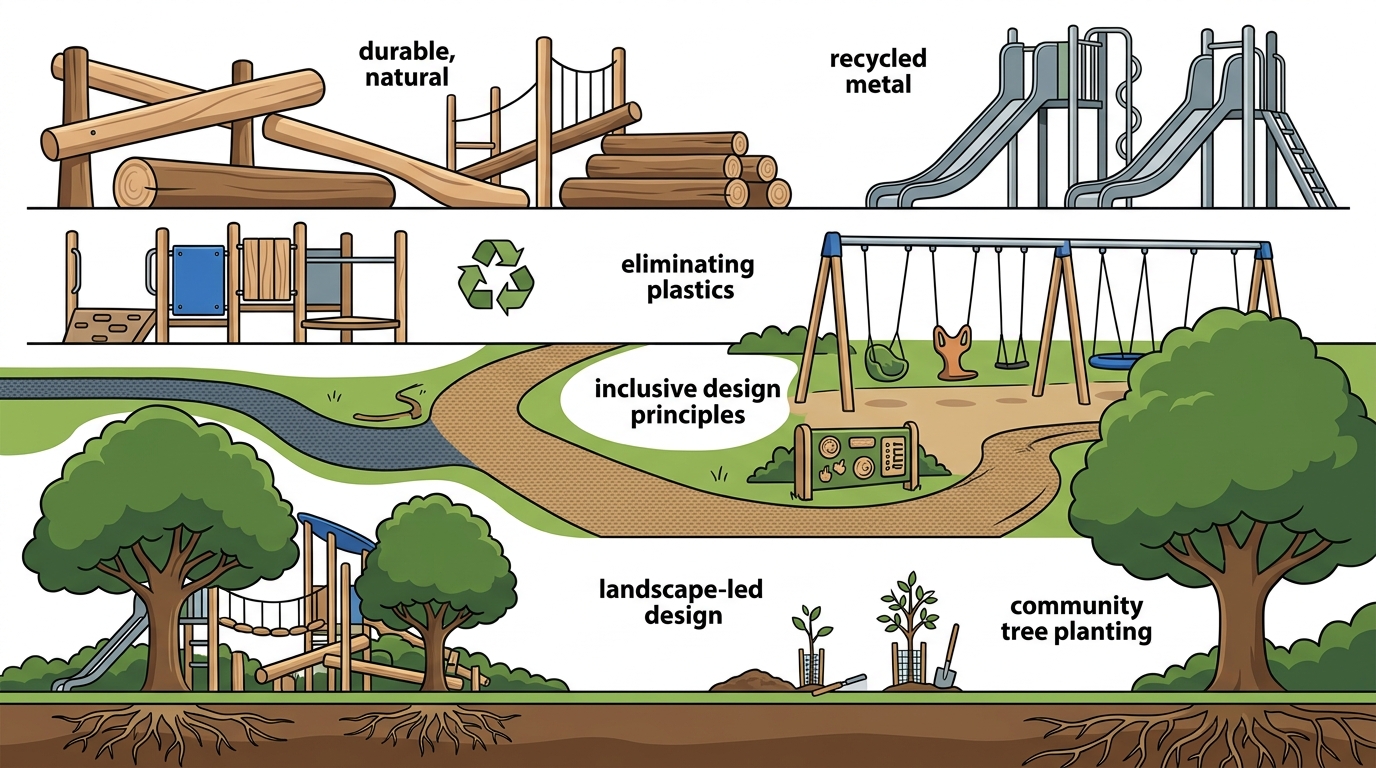
Jupiter Play and Leisure creates sustainable play solutions by prioritizing durable, low-maintenance materials, eliminating plastics, and integrating inclusive design principles. This approach ensures that outdoor spaces remain functional, accessible, and environmentally responsible for decades. This guide explores the specific strategies, from landscape-led design to community tree planting, that define our commitment to long-term sustainability.
Sustainable Materials
Quality and sustainability should be viewed as equals in playground design. Investing in high-quality materials, sustainably sourced with quality craftsmanship, helps ensure the long-term use of play spaces with low revenue costs. This ultimately reduces our environmental impact by extending the lifespan of the infrastructure. We are one of few play companies actively reducing plastics in our products, having omitted them from our primary timber brand, FHS.
Our biggest push is for zero plastics in our play equipment, which we have now achieved with our main suppliers. We are acutely aware of the constraints surfacing places on being able to achieve a completely zero-plastics playground. However, we are working on finding alternative solutions that offer durability with minimal maintenance for our industry. This commitment to material integrity ensures that the spaces we build do not require frequent replacement, thereby reducing waste and resource consumption over time.
Inclusive Play Design
Inclusive play design is the practice of creating environments where children of all abilities can play together. One in 20 children under the age of 16 live with a disability. As playspace specialists, we must understand this to design inclusive play areas that enable children and their families, regardless of ability, to experience the same sense of wonder as everyone else. One tool that we use to inform our designs is the Six Senses of Inclusion wheel. This tried and tested design practice, developed by PiPA Play, is the key to creating the most enriched, playful experiences for children.
Despite this, 62% of our recent inclusivity webinar attendees shared that they have never referred to this tool when designing a play space. We are on a mission to shift this statistic and help make inclusive play the standard across the UK. By designing with sight, sound, smell, touch, vestibular balance, and proprioception in mind, we can provide an enhanced sensory experience for all visitors. Whether you are a designer or inclusivity advocate, our resources are here to support you in applying this design practice to create inclusive play spaces that uplift all abilities.
Plastic Elimination
Plastic elimination is a critical component of our sustainability strategy. Our products are made from non-toxic materials, and we work with a supply chain that continuously strives to reduce its impact on the environment. This is represented through ISO 14001 and other worldwide initiatives. Our biggest push is for zero plastics in our play equipment, which we have now achieved with our main suppliers, FHS. This shift away from synthetic materials reduces the carbon footprint associated with manufacturing and disposal.
While we acknowledge that surfacing materials present a challenge in achieving a completely zero-plastics playground, we are actively researching alternatives. These alternatives aim to offer durability with minimal maintenance while adhering to our environmental standards. By leading the industry in plastic reduction, we set a benchmark for other providers to follow, ensuring that the next generation of play spaces is built on a foundation of ecological responsibility.
Landscape Led Design
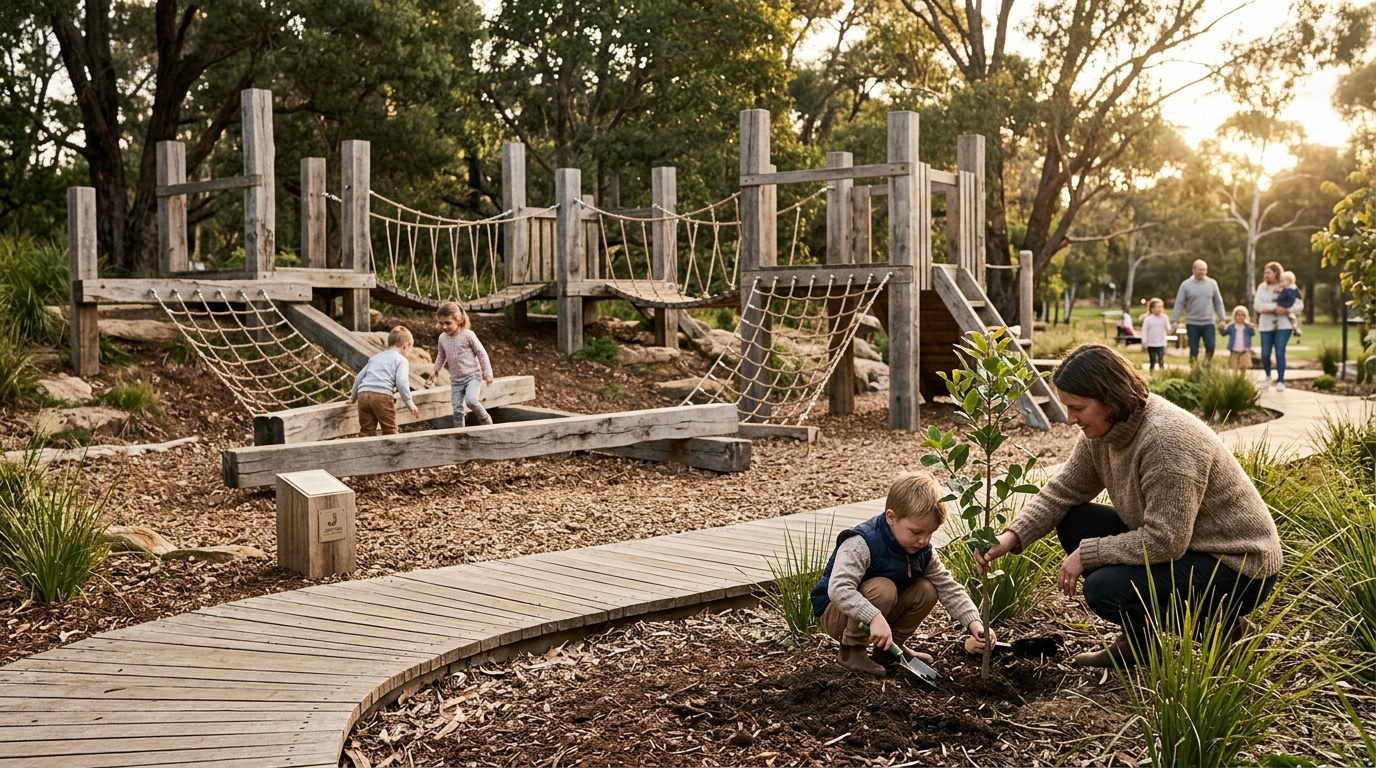
Landscape-led design is an approach that integrates play equipment with the natural environment rather than imposing it upon it. This method creates a sense of place and ensures that the play space feels like a natural extension of the surrounding landscape. For example, in our project at Hudson Way, Somerset, we collaborated with local schools and landscape architects to create a bespoke timber ship. This design showcased our landscape-led approach, using sustainable materials that work together with the environment to create a feature with a 'Wow' factor.
This approach was recognized when we were awarded the Best Bespoke Outdoor Playground Equipment Award for Innovation in the UK by the 2015 Construction Awards. It is a well-deserved recognition of a project that truly engaged a community. By prioritizing the integration of natural elements, we ensure that the play space remains relevant and appealing for years to come, reducing the need for frequent redesigns or replacements.
Biodiversity and Rewilding
Biodiversity and rewilding are essential components of sustainable play design. By incorporating native plants and natural features into our projects, we support local ecosystems and provide children with opportunities to connect with nature. This connection is vital for their development and well-being. Our projects often include elements that encourage interaction with the natural world, such as sensory gardens and natural climbing structures.
For instance, at Beecraigs Country Park in West Lothian, we created a bee-themed bespoke unit that enhanced both the play and natural elements offered within the site. By reflecting on what the site was and its importance to the local community, we aimed to provide something unique and fun for the space. This approach ensures that the play space not only serves its primary function but also contributes to the ecological health of the area.
Community Tree Planting
Community tree planting is a tangible way to support the worldwide focus on planting more trees, mitigating climate change, and protecting the environment for future generations. Sustainable Shoots is our tree planting initiative. With every large-scale playground project delivered by Jupiter Play, we offer a tree that can be planted as part of the scheme or donated to a local community group or school. This initiative ensures that our projects have a lasting positive impact on the local environment.
By involving the community in the planting and care of these trees, we foster a sense of ownership and stewardship. This not only benefits the environment but also strengthens community bonds. Our commitment to tree planting is a small but significant step towards a more sustainable future, and we are proud to be part of this global effort.
Zero Plastics Initiative
The Zero Plastics Initiative is a core part of our sustainability strategy. We are committed to eliminating plastics from our play equipment wherever possible. This initiative involves working closely with our suppliers to develop and source materials that meet our high standards for durability and environmental responsibility. By achieving zero plastics with our main suppliers, we have set a new standard for the industry.
This initiative is not just about the materials used in the equipment but also about the entire lifecycle of the product. From manufacturing to disposal, we strive to minimize our environmental impact. By leading the way in plastic elimination, we hope to inspire other companies in the industry to adopt similar practices, ultimately contributing to a more sustainable future for all.
Inclusive Landscape Design
Inclusive landscape design is the integration of accessibility and inclusivity into the broader landscape of a play space. This ensures that all users, regardless of their abilities, can navigate and enjoy the space. Our projects often include features such as accessible pathways, sensory elements, and inclusive play equipment. For example, at Stanway Lakelands Centre in Colchester, we designed a fully inclusive play facility that children with special educational needs, sensory needs, and those with mobility-related issues could play and interact alongside all other children.
The design provides a journey through the space, inspired by the adjacent community centre and country park, using landscaping, surfacing, and planting elements to enhance this. By integrating sensory elements to stimulate sight, touch, smell, and sound, we create a space that is not only accessible but also engaging and enjoyable for all users. This approach ensures that the play space is a true community hub, welcoming to everyone.
Low Maintenance Equipment
Low maintenance equipment is a key aspect of sustainable play design. By choosing durable, high-quality materials, we reduce the need for frequent repairs and replacements. This not only saves money for the client but also reduces the environmental impact associated with manufacturing and disposing of new equipment. Our products are designed to withstand all environments and conditions, ensuring that they remain functional and safe for years to come.
For example, our FHS Robinia timber products have proven to withstand all environments and conditions. This durability is a testament to the quality of our materials and craftsmanship. By investing in low maintenance equipment, we help our clients create play spaces that are not only sustainable but also cost-effective in the long run. This approach ensures that the play space remains a valuable asset to the community for decades.
Key Takeaways
- Quality and sustainability are equals in playground design, ensuring long-term use with low revenue costs.
- Inclusive play design uses the Six Senses of Inclusion wheel to create enriched experiences for all abilities.
- Plastic elimination is a core strategy, with zero plastics achieved in our main timber products.
- Landscape-led design integrates play equipment with the natural environment, creating a sense of place.
- Biodiversity and rewilding support local ecosystems and provide children with opportunities to connect with nature.
- Community tree planting through Sustainable Shoots supports climate change mitigation and community stewardship.
- The Zero Plastics Initiative sets a new standard for the industry by eliminating plastics from play equipment.
- Low maintenance equipment reduces the need for frequent repairs and replacements, saving money and reducing environmental impact.
Frequently Asked Questions
What is the Six Senses of Inclusion wheel?
The Six Senses of Inclusion wheel is a design practice developed by PiPA Play that helps create enriched, playful experiences for children by considering sight, sound, smell, touch, vestibular balance, and proprioception.
How does Jupiter Play eliminate plastics from its products?
Jupiter Play eliminates plastics by working with suppliers to source non-toxic, durable materials, such as FHS Robinia timber, and by researching alternative surfacing solutions that offer durability with minimal maintenance.
What is the Sustainable Shoots initiative?
Sustainable Shoots is a tree planting initiative where Jupiter Play offers a tree with every large-scale playground project, which can be planted as part of the scheme or donated to a local community group or school.
How does landscape-led design benefit a play space?
Landscape-led design integrates play equipment with the natural environment, creating a sense of place and ensuring that the play space feels like a natural extension of the surrounding landscape.
Why is low maintenance equipment important for sustainability?
Low maintenance equipment reduces the need for frequent repairs and replacements, saving money for the client and reducing the environmental impact associated with manufacturing and disposing of new equipment.
How does Jupiter Play ensure inclusivity in its designs?
Jupiter Play ensures inclusivity by using the Six Senses of Inclusion wheel and designing spaces that are accessible and engaging for children of all abilities, including those with special educational needs and mobility-related issues.