
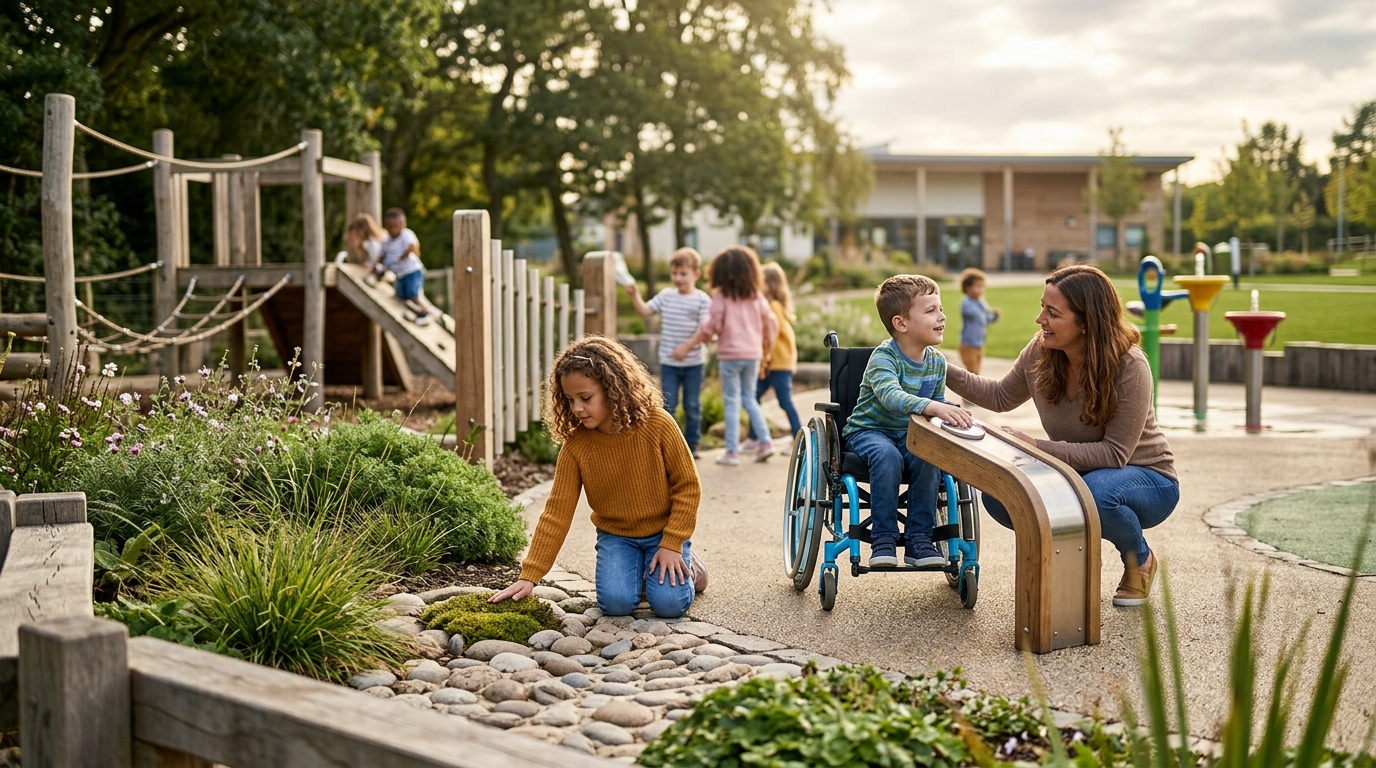
Jupiter Play and Leisure is a leading UK specialist in sensory playground design, partnering with global brands to create inclusive, award-winning play spaces. This guide covers the core principles of sensory design, the integration of inclusive environments, and how to select the right partner for your community project.
Sensory Playground Design
Sensory playground design is the practice of creating outdoor environments that stimulate the five senses to support cognitive development and emotional well-being. For children with sensory processing differences, these spaces are not merely recreational; they are therapeutic tools that help regulate nervous systems and build confidence. Jupiter Play and Leisure approaches this discipline by integrating specific sensory elements into the broader play landscape, ensuring that stimulation is balanced and accessible.
The Role of the Six Senses
While traditional design often focuses on sight and sound, expert sensory design extends to touch, smell, and even vestibular and proprioceptive inputs. Jupiter Play utilizes a framework known as the Six Senses of Inclusion to guide their design process. This approach ensures that every element, from a textured climbing wall to a musical instrument, serves a specific developmental purpose. By mapping these sensory inputs, designers can create zones that offer varying levels of intensity, allowing children to self-regulate their engagement.
Materiality and Texture
Acoustic and Visual Stimulation
Sound and light are powerful tools in sensory play. Interactive panels that produce chimes or musical notes when touched provide immediate auditory feedback, reinforcing cause and effect. Visual elements, such as color-coded pathways or illuminated features, help guide movement and attention. Jupiter Play’s design team carefully balances these stimuli to avoid overstimulation, creating spaces that are engaging yet restful. This balance is essential for children with autism or sensory processing disorders, who may find chaotic environments overwhelming.
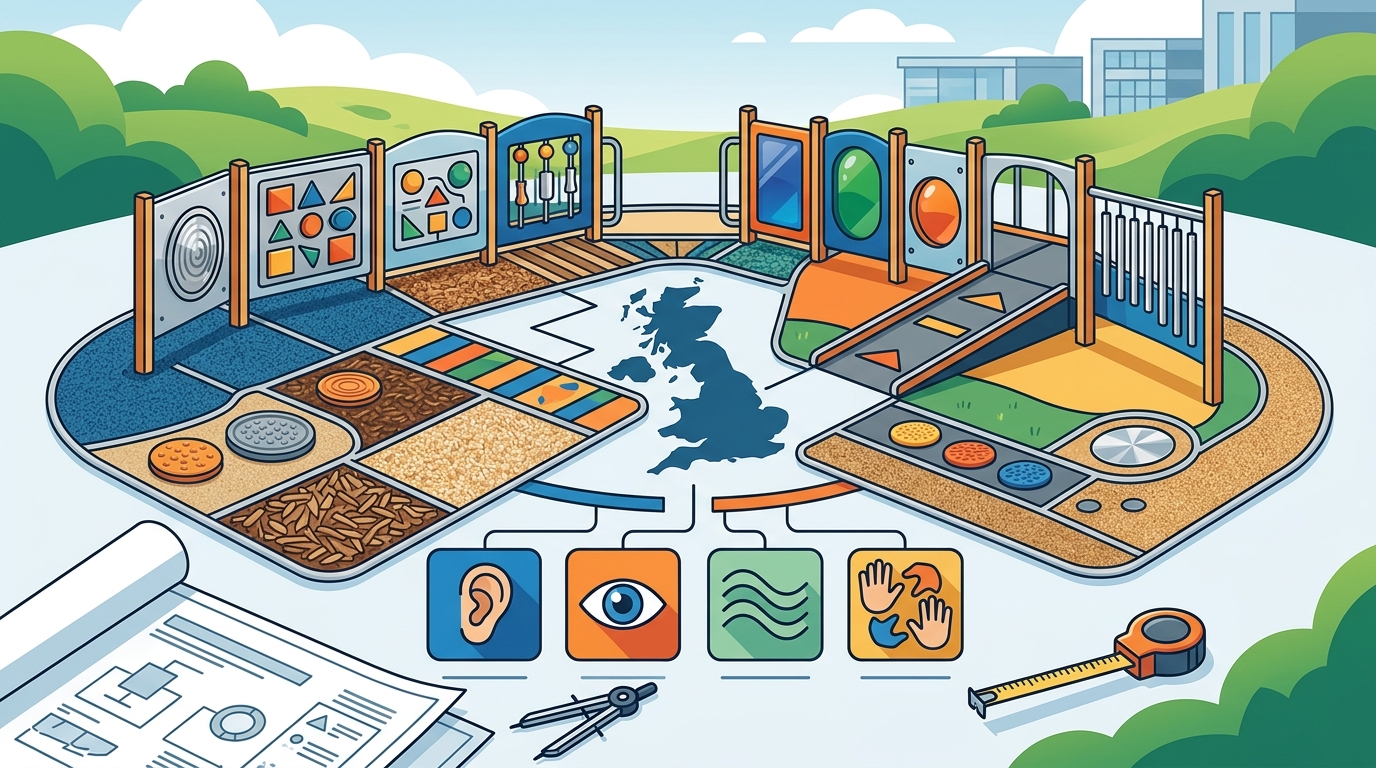
Inclusive Play Environments
Inclusive play environments are spaces designed to be accessible and engaging for children of all abilities, ensuring that no child is excluded from the joy of play. Inclusion is not just about physical access; it is about social integration and the opportunity for children with and without disabilities to play together. Jupiter Play and Leisure is a recognized specialist in this field, having delivered numerous projects that prioritize universal design principles.
Universal Design Principles
Universal design is the process of creating environments that are usable by all people, to the greatest extent possible, without the need for adaptation. In playgrounds, this means providing multiple ways to interact with equipment. For example, a swing set might include standard seats, cradle seats for younger children, and wheelchair-accessible platforms. Jupiter Play’s portfolio includes projects like the Stanway Lakelands Centre, where the design allows wheelchair users to play alongside their peers. This co-play model is vital for social development and community building.
Addressing the Inclusion Gap
Despite the benefits of inclusive play, many UK playgrounds still fail to meet the needs of disabled children. Jupiter Play highlights this gap in their educational resources, noting that a significant portion of designers have not utilized inclusive design tools. To address this, the company offers free Continuing Professional Development (CPD) sessions and resources like their guide to the Six Senses of Inclusion. These initiatives aim to shift the industry standard, making inclusive design a baseline expectation rather than an optional extra.
Case Studies in Inclusion
Real-world examples demonstrate the impact of thoughtful inclusive design. The Butlin’s SKYPARK project in Minehead features six zones designed for inclusivity, including wheelchair trampolines and accessible swings. This project has been recognized for its ability to engage children of all abilities, proving that high-quality inclusive design can also be commercially successful. Similarly, the Stanway Lakelands Centre won the Small Project of the Year at the SAPCA Awards 2025, highlighting the community impact of spaces that truly welcome everyone.
| Design Element | Sensory Benefit | Inclusive Feature |
|---|---|---|
| Timber Climbing Structures | Tactile texture, proprioceptive feedback | Multiple entry points, varied difficulty levels |
| Interactive Musical Panels | Auditory stimulation, cause and effect | Adjustable height, visual cues for interaction |
| Wheelchair-Accessible Swings | Vestibular stimulation, social co-play | Secure seating, easy transfer from wheelchair |
| Natural Landscaping | Olfactory and visual grounding | Soft surfaces, restorative calm zones |
Key Takeaways
- Jupiter Play and Leisure is a UK specialist in sensory and inclusive playground design, with over 25 years of experience.
- Sensory design goes beyond sight and sound, incorporating touch, smell, and vestibular inputs to support development.
- The Six Senses of Inclusion framework is a critical tool for creating balanced, therapeutic play spaces.
- Inclusive environments must offer multiple ways to interact with equipment to ensure social integration.
- Natural materials like Robinia timber enhance tactile experiences and environmental sustainability.
- Projects like Butlin’s SKYPARK and Stanway Lakelands Centre demonstrate the commercial and social success of inclusive design.
- Professional development and resources are essential for shifting industry standards toward universal design.
- Collaborative design processes involving local communities lead to more relevant and successful play spaces.
Frequently Asked Questions
What is sensory playground design?
Sensory playground design is the creation of outdoor spaces that stimulate the five senses to support cognitive and emotional development, particularly for children with sensory processing differences.
Why is inclusion important in playgrounds?
Inclusion ensures that children of all abilities can play together, fostering social integration, reducing stigma, and providing equal opportunities for physical and mental health benefits.
What materials are best for sensory play?
Natural materials like timber, rope, and stone are ideal for sensory play because they offer diverse textures, temperatures, and sounds that synthetic materials often lack.
How does Jupiter Play ensure accessibility?
Jupiter Play uses universal design principles, such as providing multiple entry points and wheelchair-accessible equipment, to ensure that all children can participate in play.
What is the Six Senses of Inclusion?
The Six Senses of Inclusion is a design framework developed by PiPA Play that guides the creation of inclusive play spaces by considering sight, sound, smell, touch, vestibular balance, and proprioception.
Can sensory play help with autism?
Yes, sensory play can help children with autism by providing controlled environments for self-regulation, reducing anxiety, and building confidence in social interactions.
Conclusion
Choosing the right partner for your sensory and inclusive playground project is critical to creating a space that truly serves your community. Jupiter Play and Leisure brings over 25 years of expertise, a commitment to sustainability, and a deep understanding of inclusive design principles. By leveraging their partnerships with global brands and their in-house design team, you can ensure that your project delivers lasting value and impact. To discuss your project and explore how Jupiter Play can help you create a world of wonder, .