
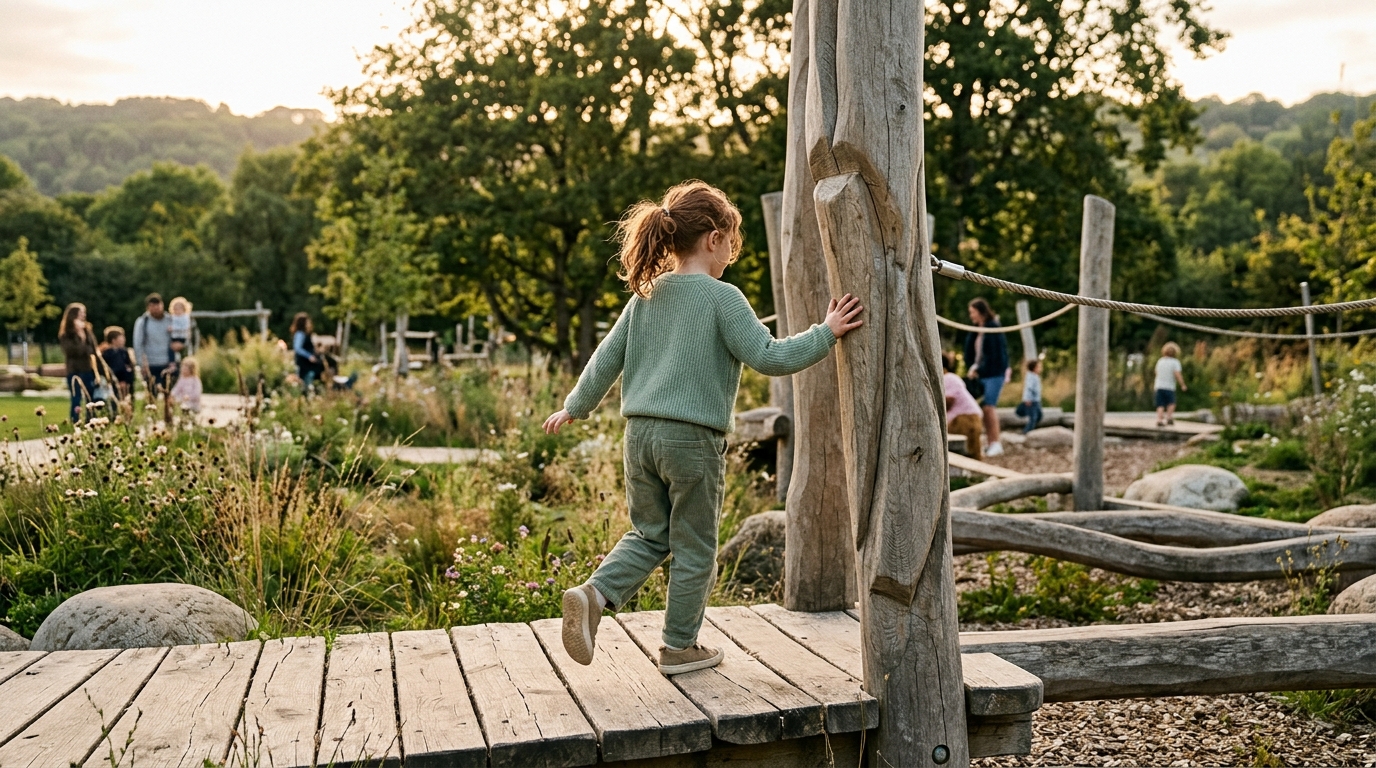
How Jupiter Play and Leisure Creates Sustainable Play Solutions
Jupiter Play and Leisure creates sustainable play solutions by prioritizing durable, plastic-free materials, landscape-led design, and inclusive community engagement. This approach ensures long-term environmental and social value. This guide covers material sourcing, plastic elimination, biodiversity, tree planting, and inclusive design strategies.
Sustainable Materials
Quality and sustainability should be viewed as equals in playground design. Investing in sustainably sourced materials with quality craftsmanship ensures long-term use with low revenue costs. This strategy ultimately reduces the environmental impact of public play spaces. Jupiter Play and Leisure emphasizes that durable materials are a core component of their sustainable journey.
Timber Selection and Durability
The company partners with FHS, their longest-serving collaborator established in 1984. FHS provides beautifully crafted Robinia timber products that withstand all environments and conditions. Robinia is a hardy, sustainable timber that offers a natural aesthetic while providing the robustness required for high-traffic public areas. This choice avoids the rapid degradation often seen in less durable materials.
Supply Chain Integrity
Products are made from non-toxic materials within a supply chain that strives to reduce environmental impact. The company works with suppliers who adhere to ISO 14001 and other worldwide environmental initiatives. This commitment ensures that the production process aligns with the sustainability goals of the final product. By selecting partners who share these values, Jupiter Play ensures ethical and ecological responsibility throughout the lifecycle of the equipment.
Plastic Elimination
One of the most significant pushes in the industry is for zero plastics in play equipment. Jupiter Play is one of the few play companies actively reducing plastics in their products. They have achieved zero plastics in their main FHS brand products. This move addresses the growing concern over microplastics and the environmental burden of plastic waste in public spaces.
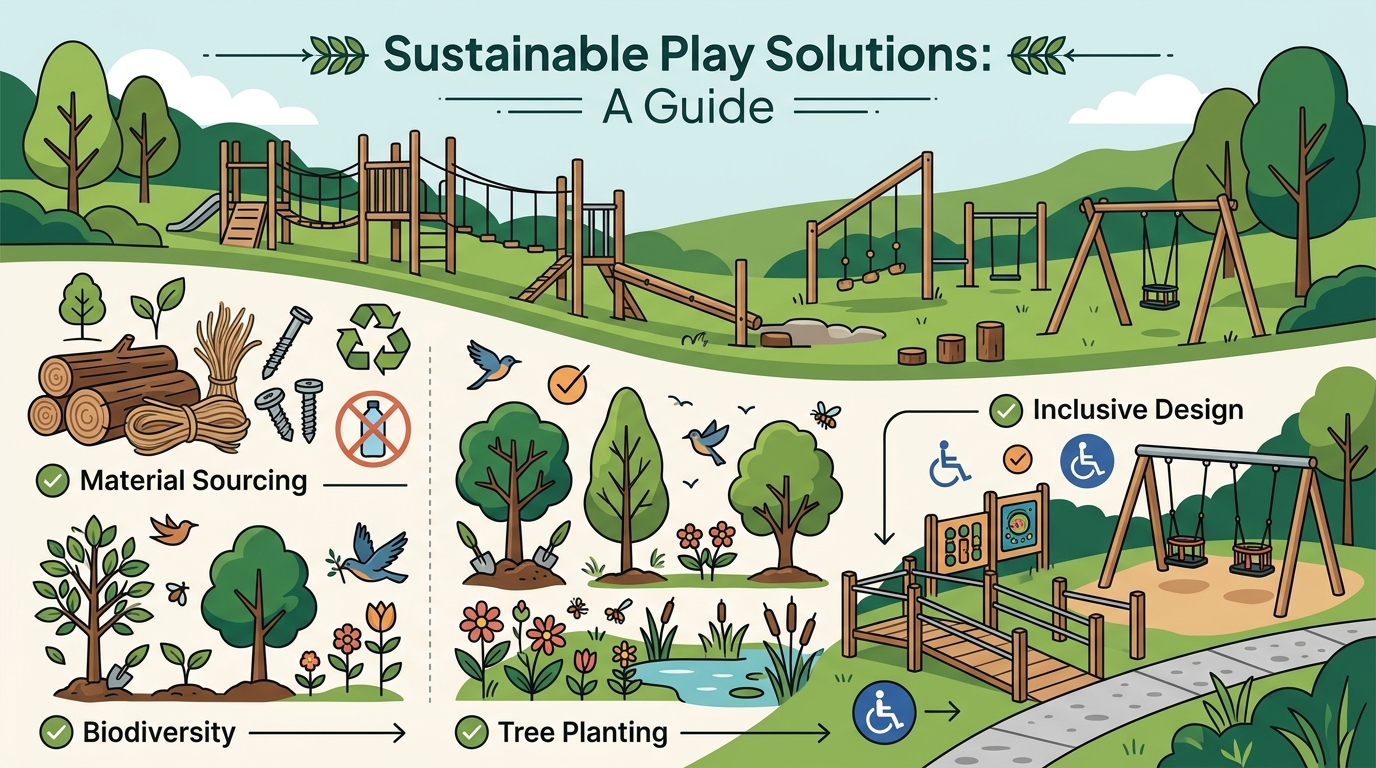
Addressing Surfacing Challenges
While eliminating plastic from equipment is a major milestone, surfacing presents unique constraints. The company is acutely aware of the restraints surfacing has on achieving a completely zero-plastics playground. They are actively working on finding alternative solutions that offer durability with minimal maintenance. This ongoing research reflects a commitment to holistic sustainability rather than partial solutions.
Environmental Impact Reduction
By omitting plastics from their core product lines, the company reduces the carbon footprint associated with plastic manufacturing and disposal. This initiative supports the worldwide focus on mitigating climate change and protecting the environment for future generations. It demonstrates that commercial play providers can lead by example in reducing single-use and long-lasting plastic pollution.
Landscape Led Design
Landscape-led design is an approach that integrates play equipment seamlessly into the natural environment. This method creates a sense of place and enhances the visual appeal of the space. It moves away from isolated structures to create cohesive, immersive experiences. For example, the bespoke timber ship at Hudson Way in Somerset was created through extensive consultation with local schools and landscape architects.
Creating a Sense of Place
Projects like the one in Taunton Deane showcase how sustainable materials work together with the environment. The design incorporates play elements that children love while maintaining a natural aesthetic. This approach ensures that the play space feels like a natural extension of the landscape rather than an intrusion. It fosters a deeper connection between children and their local surroundings.
Collaborative Process
The best results are achieved when working in a collaborative way with landscape architects and local communities. This process ensures that the working knowledge of the site, landscape, and history is accurately represented. It avoids the