
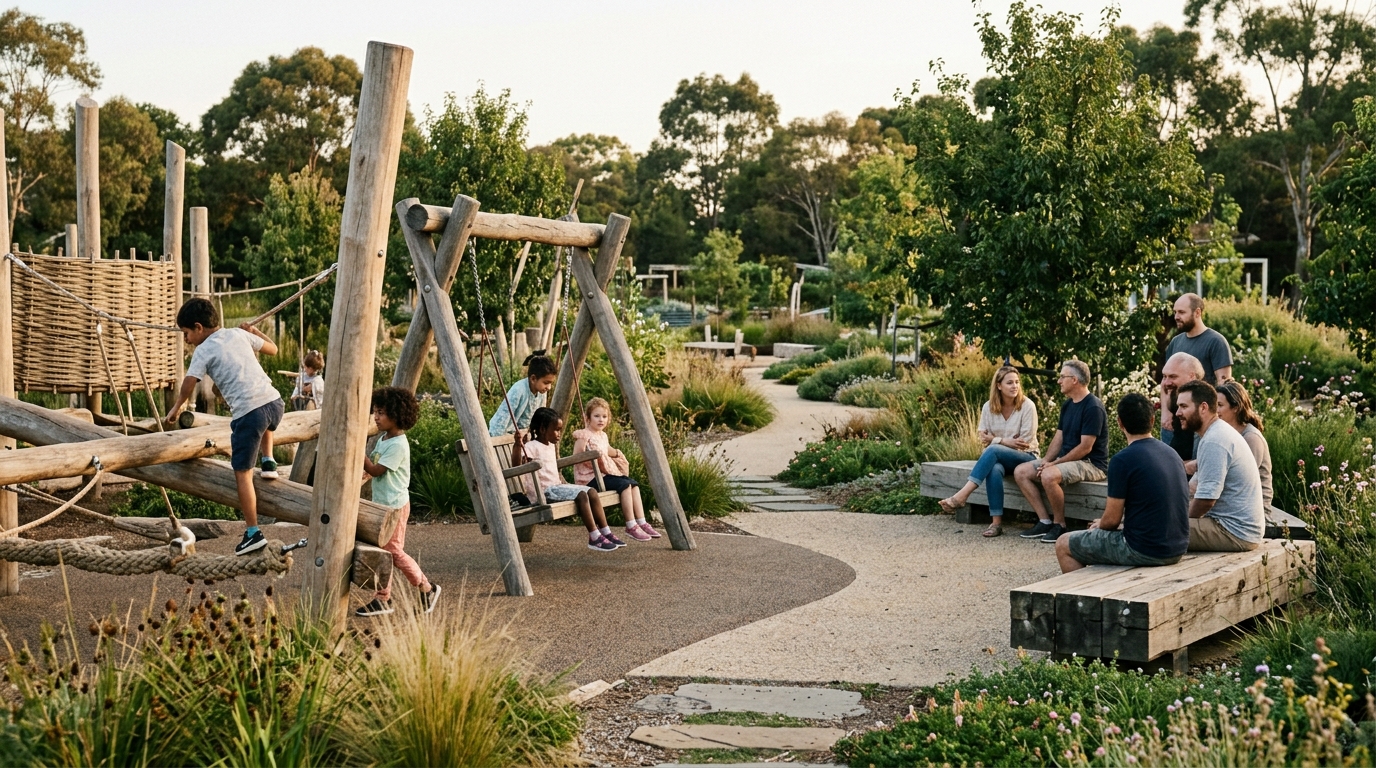
Jupiter Play and Leisure creates sustainable play solutions by prioritizing zero-plastic timber, landscape-led design, and community engagement. This guide explores how the company eliminates waste, supports biodiversity, and builds inclusive spaces that last for generations.
Sustainable Materials
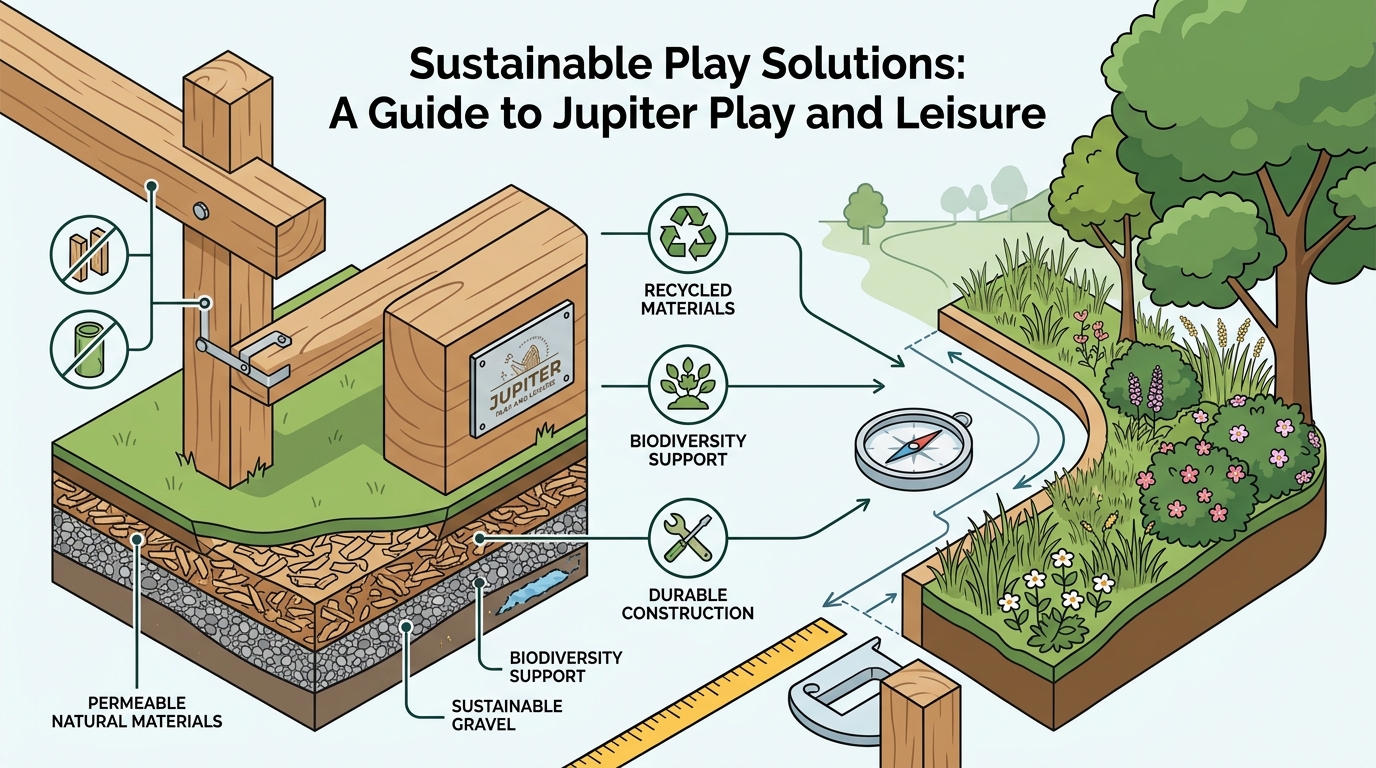
Quality and sustainability should be viewed as equals in playground design. Investing in quality materials, sustainably sourced with quality craftsmanship helps to ensure the long-term use of play spaces with low revenue costs and ultimately reduces our environmental impact. Sustainable materials is a core pillar of our approach, ensuring that every product we install is built to last and has a minimal footprint.
We are one of few play companies who is actively reducing plastics in our products having omitted this from our FHS brand. Our products are made from non-toxic materials and we work with a supply chain that continuously strives to reduce their impact on the environment, represented through ISO 14001 and other worldwide initiatives. Our biggest push is for zero plastics in our play equipment, which we have now achieved with our main suppliers FHS.
Why Durability Matters
Durability is the most effective form of sustainability. When a play structure lasts for decades rather than years, it reduces the need for replacement, manufacturing, and transport. We are acutely aware of the restraints surfacing has on being able to achieve a completely zero plastics playground and we are working on finding alternative solutions that offer durability with minimal maintenance for our industry.
Plastic Elimination
The elimination of plastic from play equipment is a critical step in reducing environmental harm. Plastic elimination is not just a marketing term for us; it is a tangible operational goal. We have achieved zero plastics in our main FHS brand products, setting a new standard for the industry.
Plastic degrades over time, becoming brittle and breaking, which leads to waste and potential microplastic pollution. By choosing timber and steel, we create products that age gracefully and can be repaired rather than replaced. This approach aligns with our commitment to look after the planet for our children and our customers.
Landscape Led Design
A landscape-led approach integrates play equipment into the natural environment rather than imposing it upon it. Landscape led design is a methodology that uses topography, planting, and natural materials to create a sense of place. This approach ensures that the play space feels like a natural extension of the surrounding landscape.
The Role of Topography
Topography plays a crucial role in landscape-led design. Slopes, mounds, and natural contours can be used to create dynamic play experiences, such as slides, climbing paths, and balancing beams. This use of natural landforms reduces the need for artificial structures and creates a more varied and engaging play environment.
Biodiversity and Rewilding
Biodiversity is essential for healthy ecosystems and for the well-being of communities. Biodiversity and rewilding are integrated into our design process to ensure that play spaces contribute to the local environment. By planting native species and creating habitats for wildlife, we help to restore ecological balance in urban and suburban areas.
Rewilding involves allowing natural processes to take over, creating spaces that are self-sustaining and resilient. This approach not only benefits wildlife but also provides children with opportunities to learn about and connect with nature. Our projects often include features such as wildflower meadows, log piles, and insect hotels, which support a wide range of species.
Creating Habitats
Creating habitats for wildlife is a key aspect of our rewilding efforts. We work with ecologists to ensure that our designs support local flora and fauna. This includes selecting plants that provide food and shelter for birds, insects, and small mammals. By creating these habitats, we help to build a more resilient and vibrant local ecosystem.
Community Tree Planting
Tree planting is a powerful way to engage communities and improve the environment. Community tree planting is a key initiative of our Sustainable Shoots program. With every large scale playground project delivered by Jupiter Play we offer a tree that can be planted as part of the scheme or donated to a local community group or school.
This initiative supports the worldwide focus to plant more trees, mitigate climate change and protect the environment for our future generations. By involving local communities in tree planting, we foster a sense of ownership and stewardship. Children and adults alike can participate in planting and caring for trees, learning about their importance in the process.
The Impact of Trees
Trees provide numerous benefits, including carbon sequestration, air purification, and habitat creation. They also provide shade and cooling, which is increasingly important as climate change leads to hotter summers. By planting trees as part of our projects, we help to create cooler, more comfortable play spaces while also contributing to global climate goals.
Inclusive Play Design
Inclusive play design ensures that all children, regardless of ability, can participate and enjoy play spaces. Inclusive play design is a fundamental principle of our work. We believe that no play space should be designed without thinking about inclusion. When you approach every play space with inclusion in mind you open up your mind to creating a more diverse and holistic play experience.
Inclusion does mean everyone, so risk and challenge need to also be part of the offer, but equally so does a range and choice of accessible play opportunities that aren’t just geared up for toddlers. We have experts in house who can help you create spaces that are truly inclusive. Our approach involves using the Six Senses of Inclusion wheel, a tried and tested design practice developed by PiPA Play, to ensure that we are engaging all senses and abilities.
The Six Senses of Inclusion
The Six Senses of Inclusion wheel is a tool that helps designers consider sight, sound, smell, touch, vestibular balance, and proprioception. By designing with these senses in mind, we can provide an enhanced sensory experience for all visitors. This approach ensures that children with different abilities can engage with the space in meaningful ways.
Key Takeaways
- Quality and sustainability are equals; investing in durable materials reduces long-term environmental impact.
- Zero-plastic products are now available through our partnership with FHS, setting a new industry standard.
- Landscape-led design integrates play into the natural environment, creating a sense of place.
- Biodiversity and rewilding efforts support local ecosystems and provide learning opportunities for children.
- Community tree planting through Sustainable Shoots engages local groups and mitigates climate change.
- Inclusive play design ensures that all children, regardless of ability, can participate and enjoy play spaces.
- The Six Senses of Inclusion wheel is a key tool for creating enriched, sensory experiences.
- Collaboration with landscape architects and ecologists is essential for creating sustainable, inclusive play spaces.
Frequently Asked Questions
What is the main benefit of using sustainable materials in playgrounds?
The main benefit is long-term durability and reduced environmental impact. Sustainable materials are designed to last, reducing the need for replacement and minimizing waste.
How does Jupiter Play eliminate plastic from its products?
We have achieved zero plastics in our main FHS brand products by using timber and steel instead. This approach ensures that our products are durable and environmentally friendly.
What is landscape-led design?
Landscape-led design is a methodology that integrates play equipment into the natural environment using topography, planting, and natural materials to create a sense of place.
How does rewilding benefit play spaces?
Rewilding creates habitats for wildlife and provides children with opportunities to learn about and connect with nature. It also helps to restore ecological balance in urban and suburban areas.
What is the Sustainable Shoots program?
Sustainable Shoots is our tree planting initiative. With every large scale playground project, we offer a tree that can be planted as part of the scheme or donated to a local community group or school.
How does inclusive play design work?
Inclusive play design ensures that all children, regardless of ability, can participate and enjoy play spaces. It involves using tools like the Six Senses of Inclusion wheel to create enriched, sensory experiences.
Why is community engagement important in sustainable play?
Community engagement fosters a sense of ownership and stewardship. By involving local groups in tree planting and design, we create spaces that are valued and cared for by the community.
How can I get in touch with Jupiter Play and Leisure?
You can contact us through our website or by visiting our offices in Nottingham or Edinburgh. We are here to help you create sustainable, inclusive play spaces for your community.
Conclusion
Jupiter Play and Leisure is committed to creating sustainable, inclusive play spaces that benefit communities and the environment. By prioritizing sustainable materials, eliminating plastic, and integrating landscape-led design, we create spaces that last for generations. Our initiatives in biodiversity, rewilding, and community tree planting further enhance the value of our projects. If you are looking to create a sustainable play space, to discuss how we can help.