
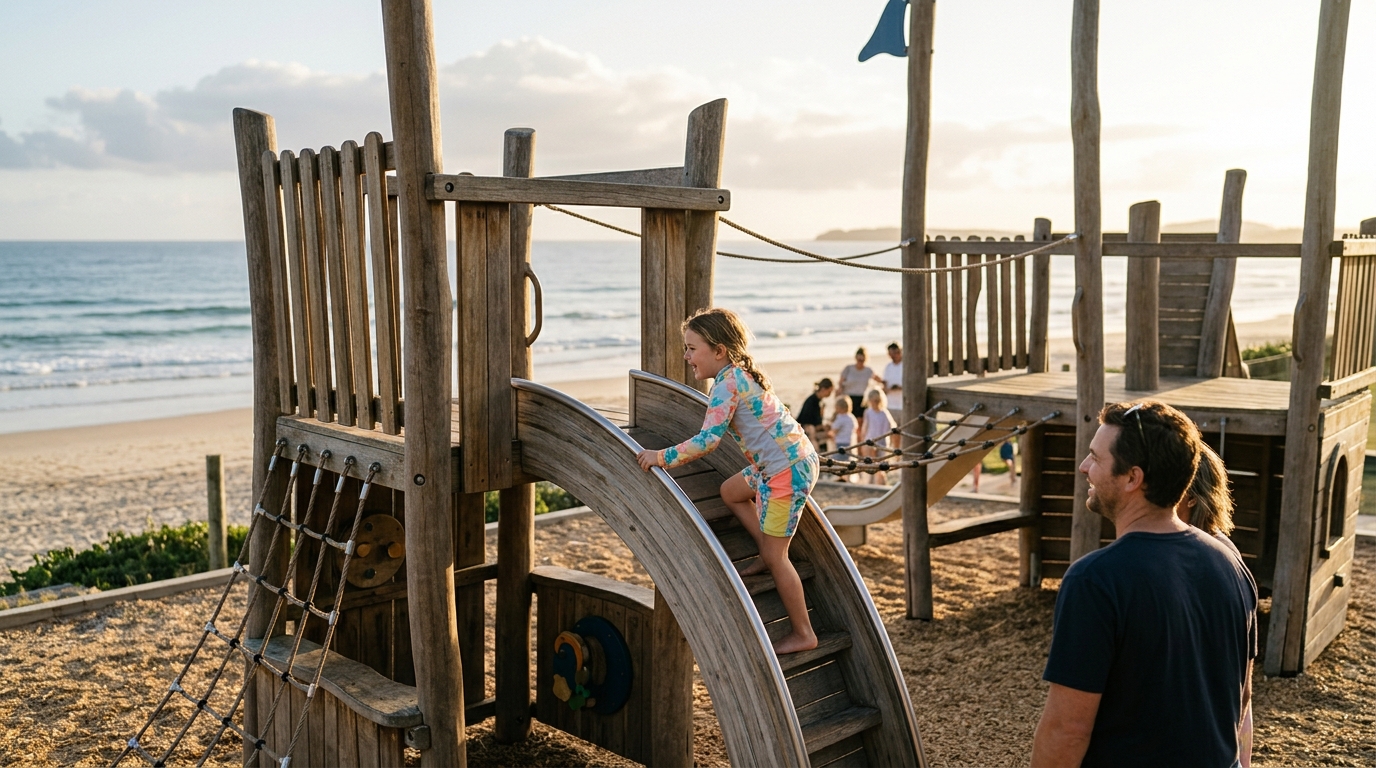
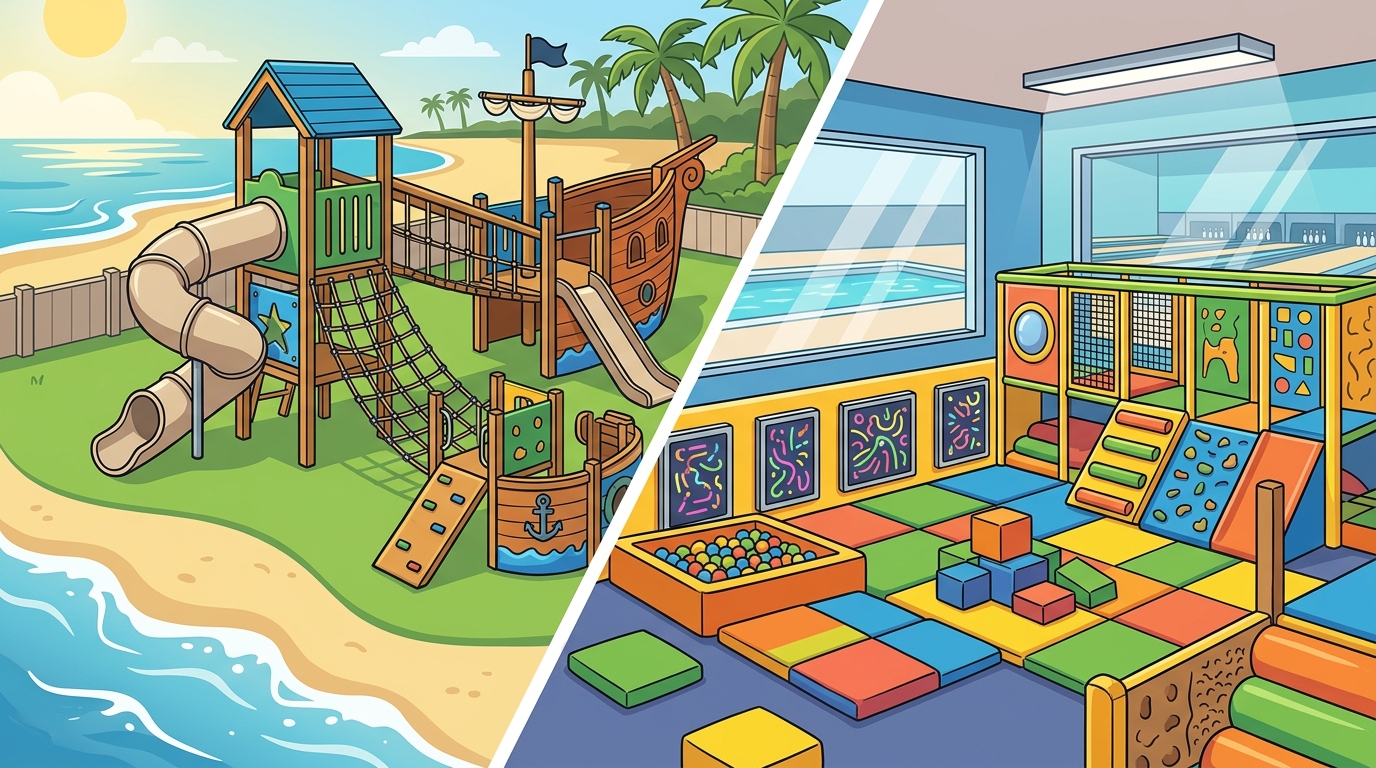
Seaside resort play areas prioritize weather resilience, thematic immersion, and high-capacity flow, while indoor leisure facilities focus on climate control, safety compliance, and sensory variety. Jupiter Play and Leisure approaches both environments by balancing environmental constraints with user engagement to create spaces that deliver consistent value and community impact.
Environmental Resilience and Material Selection
Outdoor seaside environments expose play equipment to salt air, high humidity, and intense UV radiation. These factors accelerate material degradation, making durability a primary design constraint. In contrast, indoor facilities operate in controlled climates where material selection is driven more by aesthetics and maintenance schedules than by weather resistance.
For coastal projects, designers must select materials that withstand corrosive elements without frequent replacement. Sustainability is a key factor, as durable materials reduce long-term environmental impact. For example, the Butlin's SKYPARK in Minehead utilizes robust construction to handle high visitor volumes in a coastal setting. Indoor spaces, however, can utilize a wider variety of finishes and colors that might not survive outdoor exposure.
Thematic Immersion and Narrative Design
Thematic design in coastal areas frequently incorporates local heritage or natural elements to create a unique identity. The Beecraigs Country Park project, for instance, used bespoke carvings and a bee theme to reflect the site's natural surroundings. This narrative approach helps visitors feel connected to the location. Indoor facilities may use modular themes that can be updated more easily, but they lack the immersive landscape integration possible in outdoor settings.
Accessibility and Inclusive Play Standards
Inclusive design is critical in both environments, but the implementation differs based on space and user flow. Seaside resorts must ensure that disabled visitors can access the play area from parking or accommodation, often requiring long, accessible pathways. Indoor facilities must comply with strict building regulations regarding door widths, turning spaces, and emergency egress.
Inclusive play design considers the six senses to ensure all children can participate. The Stanway Lakelands Centre demonstrates how inclusive design can be integrated into a community space, featuring wheelchair trampolines and accessible swings. In indoor settings, the focus is often on creating distinct zones for different abilities, whereas outdoor spaces aim for integrated play where children of all abilities interact naturally.
Operational Flow and Maintenance Considerations
High-capacity seaside resorts experience significant seasonal peaks, requiring play areas that can handle large crowds without becoming unsafe or overcrowded. Indoor leisure facilities operate with more consistent daily usage, allowing for different maintenance and supervision strategies. The design must account for these operational rhythms to ensure long-term viability.
Maintenance access is a key consideration for outdoor equipment, as salt and sand can clog moving parts. Indoor equipment requires regular cleaning and safety checks but is protected from weather. The Poole Park project highlights the importance of collaborative approaches in managing complex public spaces. Designers must plan for easy maintenance access in outdoor settings, while indoor spaces focus on durable surfaces that can withstand high-frequency use.
Community Engagement and Local Identity
Seaside resorts often serve as tourist destinations, so the play area must appeal to a broad demographic of visitors. Indoor leisure facilities, however, are typically embedded in local communities and must serve the specific needs of residents. This difference influences the type of play equipment and the level of interactivity required.
Local identity is a powerful tool in outdoor design, helping to create a sense of place. The Hudson Way project in Somerset used a bespoke ship design to reflect the local maritime heritage. Indoor facilities may focus on providing a safe, climate-controlled environment for year-round use, which is particularly important in regions with harsh winters. Both approaches aim to create spaces that are valued by their users, but the methods differ based on the context.
Key Takeaways
- Seaside resorts require weather-resistant materials and strong thematic narratives to create destination appeal.
- Indoor leisure facilities focus on climate control, safety compliance, and functional zoning for diverse users.
- Inclusive design is essential in both environments, but implementation varies based on space and user flow.
- Operational flow and maintenance considerations differ significantly between high-capacity outdoor and consistent indoor usage.
- Local identity and community engagement play a larger role in outdoor seaside design than in indoor facilities.
- Durable materials reduce long-term environmental impact and maintenance costs in coastal settings.
- Collaborative approaches with local stakeholders are crucial for successful play area design in both contexts.
Frequently Asked Questions
What materials are best for seaside play areas?
Weather-resistant materials like treated timber and stainless steel are ideal for seaside play areas, as they withstand salt air and humidity.
How does inclusive design differ in indoor vs outdoor spaces?
Indoor spaces focus on strict building regulations and distinct zones, while outdoor spaces aim for integrated play with accessible pathways.
Why is thematic design important in seaside resorts?
What are the maintenance challenges for outdoor play equipment?
Outdoor equipment faces challenges from salt, sand, and UV radiation, requiring regular cleaning and inspection to prevent degradation.
How can indoor facilities accommodate diverse age groups?
Indoor facilities use functional zoning to create distinct areas for different age groups and activities, ensuring a safe and engaging environment for all.
What role does local identity play in play area design?
Local identity helps create a sense of place and connection, making the play area a valued community asset and a unique tourist attraction.