
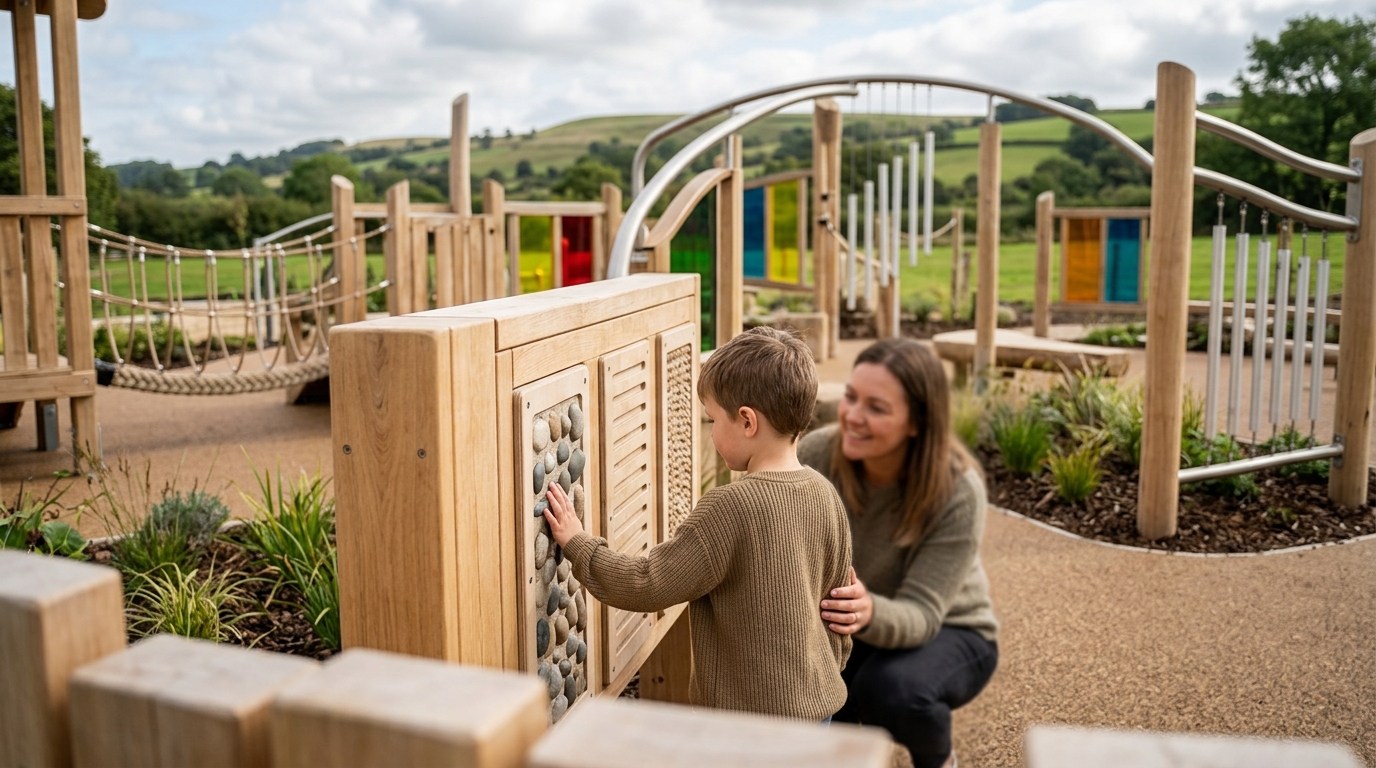
Jupiter Play and Leisure is a leading UK specialist in designing and building sensory play areas. We combine inclusive design principles with bespoke timber and steel solutions to create accessible spaces. This guide covers how to choose, verify, and budget for your project.
How to Choose a Specialist
Design Philosophy
Ask if the company uses a landscape-led approach. This means the play equipment is integrated into the natural environment rather than dropped onto a concrete pad. This approach creates a stronger sense of place and reduces the visual impact of the structures.
Inclusive Expertise
Verify if the team includes dedicated inclusion experts. At Jupiter Play, we have in-house specialists who understand the PiPA (Play Inclusion Practice Assessment) framework. This ensures the design is not just accessible, but genuinely engaging for children with disabilities.
What to Ask Before Committing
Before signing a contract, you must ask specific questions to gauge the depth of the provider's experience. Do not accept generic answers. Ask for case studies of sensory projects similar to yours. Request to see how they handled surfacing for wheelchair access. Ask about their approach to noise levels in the design. A good provider will explain how they balance stimulation with calm zones.
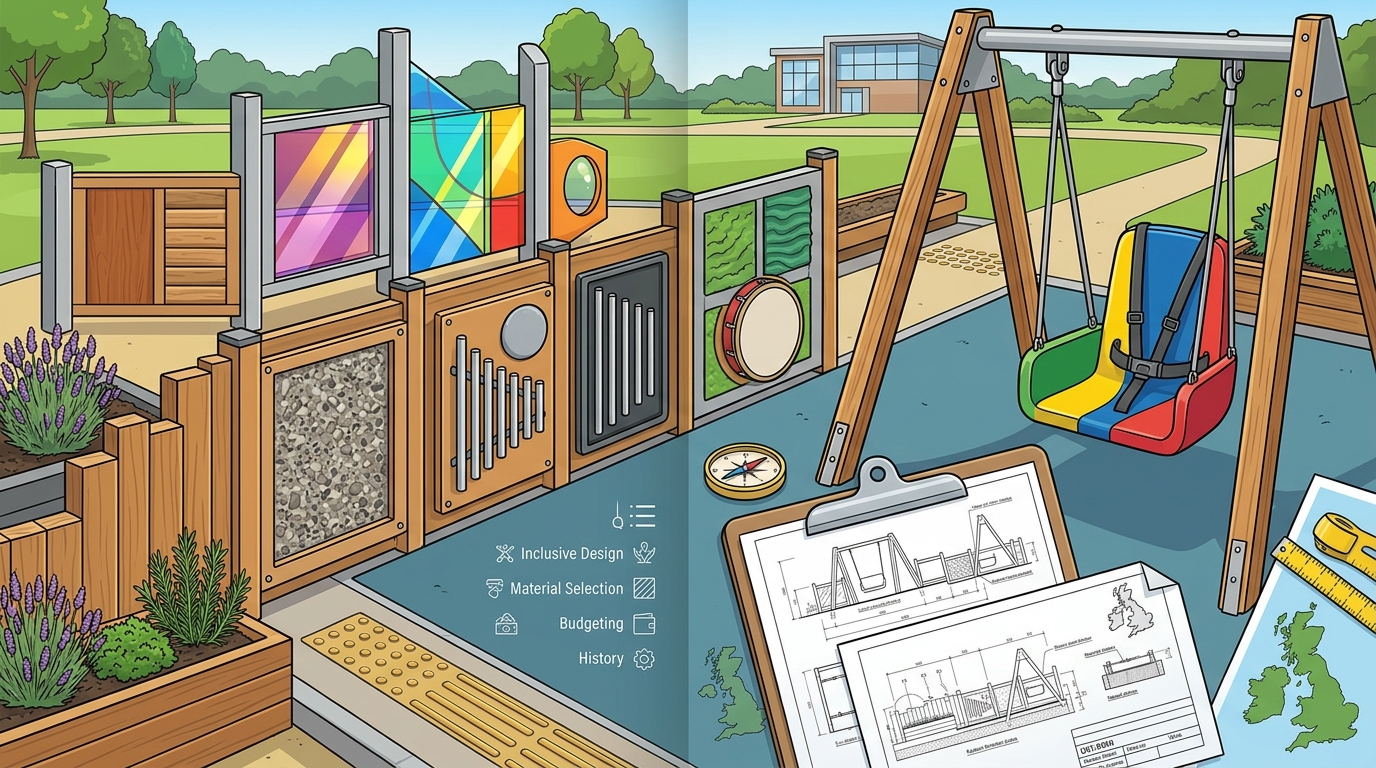
Key Questions
- How do you ensure the design meets the needs of non-verbal children?
- What materials do you use to minimize maintenance and maximize durability?
- Can you provide a post-installation support plan?
How to Verify Credentials
Claims of expertise must be backed by evidence. Check for industry accreditations and awards. Look for companies that have won awards for inclusive design or innovation. You can verify these by checking independent award bodies. Also, check their portfolio for recent projects. A company that has been in business for over 25 years, like Jupiter Play, will have a robust track record of delivered projects.
Check the Team
Look at the people behind the company. Do they have landscape architects and bespoke designers on staff? A team with diverse skills ensures that the project is handled from concept to installation by experts.
The Design and Build Process
The process typically follows a structured journey. It begins with a site visit and consultation. Next, the design team creates a concept based on your brief. This is followed by detailed design and compliance checks. Finally, the contracts team manages the installation. This end-to-end service ensures that the vision is realized without gaps in communication.
Step-by-Step Workflow
- Initial Consultation and Site Survey
- Concept Design and Community Engagement
- Detailed Design and Compliance
- Procurement and Manufacturing
- Installation and Handover
Cost Drivers and Budgeting
Understanding what drives the price helps you manage expectations. The cost of a sensory play area depends on several factors. The primary driver is the material choice. Timber products, such as FHS Robinia, are generally more expensive than steel but offer a natural aesthetic and longevity. The complexity of the bespoke elements also impacts the budget. A standard multiplay unit costs less than a fully custom sculptural piece. Surfacing is another major cost component. Impact-absorbing surfacing must be specified correctly for safety and accessibility.
Budget Ranges
| Project Scale | Typical Budget Range | Key Features |
|---|
Common Mistakes to Avoid
Many projects fail due to poor initial planning. One common mistake is ignoring the community's input. If the local users are not involved in the design, they may not engage with the space. Another error is underestimating the maintenance requirements. Choosing materials that are not durable for the local climate leads to early degradation. Finally, failing to plan for accessibility from the start can result in a space that excludes key users.
Design Pitfalls
- Choosing equipment that is too complex for the target age group.
- Ignoring the sightlines for supervision.
- Using materials that fade or rot quickly in the local environment.
Specialist vs. Generalist
Generalist playground suppliers often focus on volume and standard products. They may not have the depth of knowledge required for complex sensory needs. A specialist, like Jupiter Play, focuses on quality and bespoke solutions. This means you get a tailored design rather than a catalog item. The trade-off is that specialist projects may take longer to design but offer a higher level of play value and inclusion.
Designing for Specific Needs
The answer changes depending on your specific context. For a housing development, the focus is on creating a destination that adds value to the property. For a school, the focus is on curriculum support and safety. For a local authority, the focus is on maximizing usage and minimizing long-term maintenance costs. Jupiter Play has experience in all these sectors, from leisure and tourism to health and care.
Housing Developers
Developers need play spaces that are visually appealing and low maintenance. We use high-quality timber and steel to create spaces that look good for decades.
Regulations and Safety Standards
All play equipment in the UK must comply with strict safety standards. The primary standard is EN 1176. This covers the safety of playground equipment and surfacing. You must also consider the Equality Act 2010, which requires reasonable adjustments for disabled users. A reputable provider will ensure full compliance with these regulations. They will provide all necessary documentation and risk assessments.
Compliance Checklist
- EN 1176 Compliance for all equipment.
- Correct fall height and surfacing specifications.
- Accessibility routes meeting current building regulations.
Regional Considerations
Local conditions impact the design. In the UK, weather is a major factor. Equipment must withstand rain, wind, and temperature changes. Jupiter Play has offices in Nottingham and Edinburgh, allowing us to serve clients across the UK. We understand the specific challenges of different regions, from the coastal salt air in the south to the heavy snow in the north. This local knowledge ensures that the materials chosen are appropriate for the site.
Project Timing and Scheduling
Timing is critical for a successful project. The design phase can take several months, depending on the complexity. The manufacturing phase for bespoke items can also take time. It is best to start the process at least 6 to 12 months before your desired opening date. This allows for adequate consultation, design, and installation. Rushing the process often leads to compromises in quality and safety.
Long-Term Outcomes
The goal is a space that remains vibrant and useful for years. A well-designed sensory play area will see consistent usage from a diverse group of users. It will support the physical and mental well-being of the community. By investing in quality and inclusion, you create a lasting legacy. Jupiter Play is committed to ensuring that our projects deliver long-term value and joy.
Key Takeaways
- Choose a specialist with a multi-brand approach to avoid limited options.
- Verify credentials by checking for industry awards and recent case studies.
- Ask specific questions about inclusion, maintenance, and noise levels.
- Budget for materials and surfacing, as these are the primary cost drivers.
- Involve the community in the design process to ensure engagement.
- Ensure full compliance with EN 1176 and the Equality Act 2010.
- Start the project 6 to 12 months in advance to allow for proper planning.
- Look for a provider with local offices and regional expertise.
Frequently Asked Questions
What is the most important factor in sensory play design?
Inclusion is the most important factor. The design must allow children of all abilities to play together. This requires a mix of accessible equipment and challenging play opportunities.
How long does a typical project take?
A typical project takes 6 to 12 months from initial consultation to installation. This timeline allows for design, approval, manufacturing, and construction.
Do you offer bespoke design services?
Yes, Jupiter Play and Leisure offers a specialist in-house bespoke service. We can create unique structures that reflect the local history or theme of the site.
What materials are best for sensory play?
Timber, such as FHS Robinia, is often preferred for its natural look and durability. Steel is also a good option for a modern aesthetic. The choice depends on the site and budget.
How do you ensure safety?
All equipment is designed to meet EN 1176 standards. We also conduct thorough risk assessments and provide impact-absorbing surfacing to protect users.
Can you help with funding applications?
Yes, we can provide detailed design proposals and costings that can be used to support funding applications for local authorities and developers.
Start Your Project with Jupiter Play
Ready to create a play space that creates a sense of wonder? to discuss your project. Our experts in Nottingham and Edinburgh are ready to help you design a space that engages and inspires.