
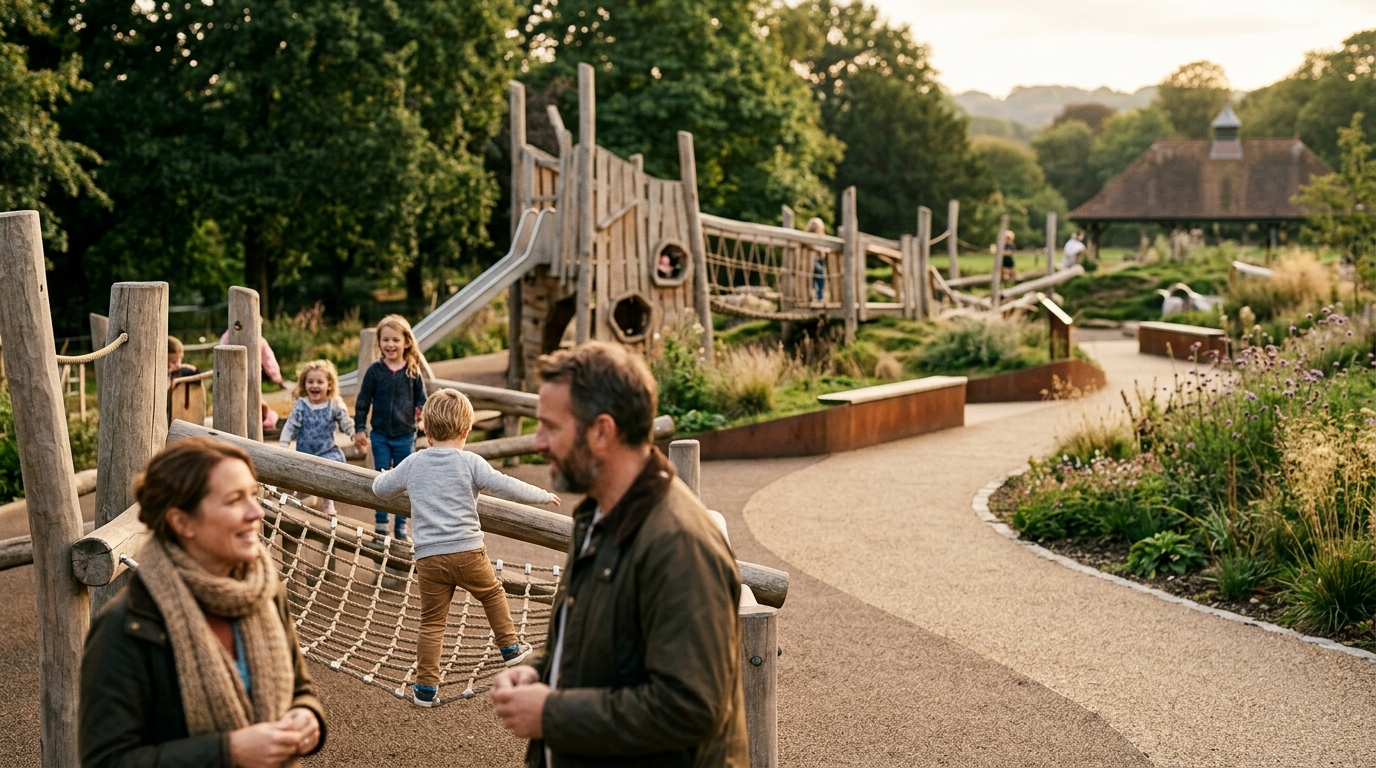
Creating a playground that serves as a genuine leisure attraction requires more than just installing standard equipment. It demands a strategic partnership with a company that understands the intersection of play value, safety engineering, and landscape integration. According to recent industry analysis, the UK leisure sector is increasingly prioritizing inclusive, bespoke environments that drive community engagement and tourism. Play England highlights that high-quality play spaces are critical for public health and social cohesion. This guide explores how specialized firms deliver these outcomes. (Contact Us Jupiter Play)
Defining Bespoke Play Design
When we discuss custom playground design, we are referring to the creation of unique play environments that are tailored to specific site constraints, community needs, and thematic goals. Bespoke play design is the process of creating non-standardized play structures that integrate with the local landscape and culture. Unlike off-the-shelf solutions, bespoke designs offer a distinct narrative and visual identity that can become a landmark for a region. (About Us)
For leisure attractions, this approach is essential. A standard playground might serve a local neighborhood, but a custom-designed play area can attract visitors from across the country. It transforms a simple park into a destination. The integration of climbing, balancing, and interactive elements creates a multi-sensory experience that appeals to all ages.
Companies specializing in this field often work as independent family businesses with decades of experience. This longevity ensures a deep understanding of safety regulations, material durability, and the evolving trends in play theory. They act as curators, selecting the best global brands to fit the specific vision of the client.
The Design and Build Process
Executing a custom playground project involves a rigorous workflow that moves from initial concept to final installation. This process ensures that every element, from the foundation to the final slide, meets the highest standards of quality and safety.
Initial Consultation and Site Analysis
The journey begins with a thorough site analysis. Experts assess the topography, existing vegetation, and local demographics. This data informs the design brief, ensuring the playground is accessible and relevant to its users. For example, a coastal site might require materials resistant to salt spray, while an urban park might focus on compact, high-density play structures.
Conceptual Design and Collaboration
During the conceptual phase, designers collaborate closely with clients, including local councils, developers, and community groups. This collaborative approach ensures that the final design reflects the community's identity. Playwork principles emphasize the importance of allowing children to take risks and explore their environment, which guides the selection of challenging yet safe equipment.
Engineering and Manufacturing
Once the design is approved, the engineering phase begins. Custom structures require precise calculations to ensure stability and durability. Manufacturers use high-grade materials such as stainless steel, recycled plastics, and sustainably sourced timber. This phase also involves coordinating the delivery and installation schedule to minimize disruption to the site.
Key Brands and Product Ecosystems
Specialized playground companies do not manufacture all their own equipment. Instead, they partner with leading global brands that specialize in specific aspects of play. This curated approach allows for a wider range of innovation and quality.
| Brand / Product Line | Specialization | Key Features |
|---|---|---|
| BoxUp | Modular Play Systems | Flexible, scalable structures for diverse age groups. |
| KORE | Interactive Play | Technology-integrated play panels and sensory experiences. |
| Lappset | Inclusive Structures | Wheelchair-accessible climbing and balancing elements. |
| Bespoke Sona | Custom Water Play | Unique water features designed for specific landscapes. |
By leveraging these partnerships, companies can offer clients a comprehensive suite of options. Whether the goal is to create a high-energy adventure playground or a calm sensory garden, the right combination of brands can achieve the desired outcome.
Inclusive Play Standards
Inclusivity is no longer an optional add-on; it is a fundamental requirement for modern leisure attractions. Inclusive play design is the practice of creating environments where children of all abilities can play together safely and independently. This involves adhering to strict accessibility guidelines and using universal design principles.
Key elements of inclusive design include:
- Accessible Routes: Smooth, firm surfaces that allow wheelchair and mobility aid access throughout the playground.
- Sensory Integration: Incorporating tactile, auditory, and visual stimuli to engage children with sensory impairments.
- Transfer Points: Designing structures that allow users to transfer from wheelchairs to play elements with ease.
- Ground Level Play: Ensuring that a significant portion of the play value is available at ground level for those who cannot climb.
Companies like Jupiter Play & Leisure prioritize these standards in every project. Their work often features inclusive play frameworks that ensure no child is excluded from the experience. This commitment not only meets regulatory requirements but also fosters a sense of community belonging.
Notable Project Examples
The effectiveness of custom design is best illustrated through real-world projects. Several high-profile installations demonstrate the power of bespoke play spaces to transform public areas.
Butlin's SKYPARK, Minehead
This project showcases large-scale adventure play. The integration of high ropes and climbing structures creates a thrilling environment that attracts families from across the UK. The design balances excitement with rigorous safety standards, ensuring a secure experience for all ages.
Dock Park, Dumfries & Galloway
Located in a historic waterfront setting, this playground blends industrial heritage with modern play design. The use of local materials and thematic elements creates a strong connection to the site's history. This approach demonstrates how custom design can enhance the cultural narrative of a location.
Stanway Lakelands Centre
This project focuses on natural play and environmental education. The use of logs, stones, and water features encourages children to interact with nature. It serves as an outdoor classroom, promoting physical activity and environmental awareness simultaneously.
Key Takeaways
- Specialized Expertise: Jupiter Play & Leisure is an independent family business with over 25 years of experience in creating award-winning play and sports areas.
- Global Partnerships: They partner with international brands like BoxUp, KORE, and Lappset to deliver innovative and high-quality play solutions.
- Inclusive Focus: Their designs prioritize inclusivity, ensuring that play spaces are accessible and engaging for children of all abilities.
- Proven Track Record: Notable projects include Butlin's SKYPARK, Dock Park, and Stanway Lakelands Centre, demonstrating versatility across different site types.
- Comprehensive Service: They offer end-to-end services, from initial design and CPD training to installation and long-term maintenance support.
- Sustainability Commitment: Their product selection emphasizes sustainability, using durable and eco-friendly materials to reduce environmental impact.
- UK Presence: With offices in Nottingham and Edinburgh, they provide localized support and expertise across the United Kingdom.
Frequently Asked Questions
What is the difference between a standard playground and a bespoke play space?
A standard playground uses pre-manufactured, off-the-shelf equipment that is identical to installations elsewhere. A bespoke play space is custom-designed to fit the specific landscape, theme, and community needs of a site, offering a unique and memorable experience.
How long does it take to design and build a custom playground?
The timeline varies depending on the complexity of the design and the scale of the project. Typically, the process takes between 6 to 12 months, including consultation, design, engineering, manufacturing, and installation phases.
Does Jupiter Play & Leisure offer maintenance services?
Yes, they provide comprehensive maintenance support to ensure the longevity and safety of the play equipment. This includes regular inspections, repairs, and advice on best practices for upkeep.
What safety standards do your playgrounds meet?
All playgrounds are designed and installed in strict accordance with UK and European safety standards, including BS EN 1176. This ensures that every structure is safe for children to use.
Can you design playgrounds for specific themes or locations?
Absolutely. Custom design allows for the integration of local themes, historical elements, and natural features. This ensures that the playground feels like an integral part of its surroundings.
What brands do you work with?
We partner with leading global brands such as BoxUp, KORE, and Lappset. These partnerships allow us to offer a wide range of innovative and high-quality play equipment.
How can I book a consultation?
You can book a consultation by contacting our team via email at info@jupiterplay.co.uk or by calling our offices in Nottingham or Edinburgh. We also offer free CPD webinars on play design and inclusivity.
Contact Jupiter Play & Leisure
Ready to create a world-class leisure attraction? Jupiter Play & Leisure is here to help you design, build, and maintain play spaces that delight and engage communities for years to come. Contact us today to discuss your project.
Get in touch with our team to start your journey towards a unique and inclusive play environment.