
Common Mistakes When Planning Sustainable Play Areas for UK Housing Developments
Creating play spaces that endure requires more than just selecting durable equipment. According to recent industry analyses, over 60% of public play spaces suffer from premature degradation due to poor initial planning and material selection. This statistic highlights a critical gap in how developers approach outdoor recreation infrastructure. When designing for UK housing estates, the margin for error is slim. A well-executed play area enhances community well-being and property value, while a poorly planned one becomes a maintenance liability within five years. This guide outlines the most frequent errors made during the planning phase and provides actionable strategies to avoid them, ensuring your investment delivers long-term value for residents and local authorities alike.
Mistake 1: Overlooking Inclusive Design Standards
One of the most critical errors in modern play space planning is failing to integrate inclusive design from the outset. Inclusive play is not an optional add-on. It is a fundamental requirement for creating spaces that welcome children of all abilities. Many developers treat accessibility as a compliance checkbox rather than a core design principle. This approach often results in segregated play areas that fail to foster genuine community interaction.
True inclusivity means designing environments where children with physical, sensory, or cognitive disabilities can play alongside their peers. This requires careful consideration of access routes, sensory panels, and adaptable equipment. At Jupiter Play & Leisure, we partner with global brands that prioritize innovation in inclusive play. Our portfolio includes projects like Butlin's SKYPARK, which demonstrates how large-scale inclusive environments can be both engaging and accessible.
When planning your development, ensure that your chosen equipment supplier has a proven track record in inclusive play solutions. Look for features such as wheelchair-accessible swings, sensory-rich panels, and ground-level interactive elements. Ignoring these aspects can lead to a play space that excludes a significant portion of the community, ultimately reducing its social value and utility.
Mistake 2: Choosing Non-Sustainable Materials
The choice of materials directly impacts the environmental footprint and longevity of a play area. A common mistake is selecting cheap, non-recyclable plastics or treated woods that degrade quickly and release microplastics into the soil. Sustainable play areas require materials that are durable, recyclable, and safe for children.
Wood is a popular choice for its natural aesthetic and renewability. However, it must be responsibly sourced and treated with non-toxic preservatives. Alternatively, high-density polyethylene (HDPE) made from recycled plastics offers excellent durability and weather resistance. According to environmental reports, the use of recycled materials in playground construction can reduce carbon emissions by up to 30% compared to virgin plastic production.
Consider the lifecycle of every component. Can it be repaired? Can it be recycled at the end of its life? Sustainability is a core pillar of our approach at Jupiter Play. We work with brands that adhere to strict environmental standards, ensuring that your play area contributes positively to the local ecosystem. Explore our brands page to discover partners who share this commitment to responsible manufacturing.
Mistake 3: Neglecting Long-Term Maintenance Costs
Developers often focus on the upfront cost of equipment while ignoring the ongoing maintenance expenses. This short-sightedness can lead to budget overruns and deteriorating play spaces within a few years. A sustainable play area must be designed for easy maintenance and repair.
Complex equipment with many moving parts or intricate designs often requires specialized labor and frequent servicing. Simpler, robust designs with fewer components tend to have lower lifetime costs. Additionally, the choice of surfacing material plays a significant role in maintenance. Loose fill materials like wood chips require regular topping up and raking, whereas poured-in-place rubber or synthetic grass offers lower maintenance requirements.
When evaluating equipment, ask suppliers for detailed maintenance schedules and cost estimates. Contact us to discuss how we can help you select equipment that balances initial investment with long-term operational efficiency. Our team provides expert advice on minimizing lifecycle costs without compromising on quality or safety.
Mistake 4: Inadequate Site Preparation and Drainage
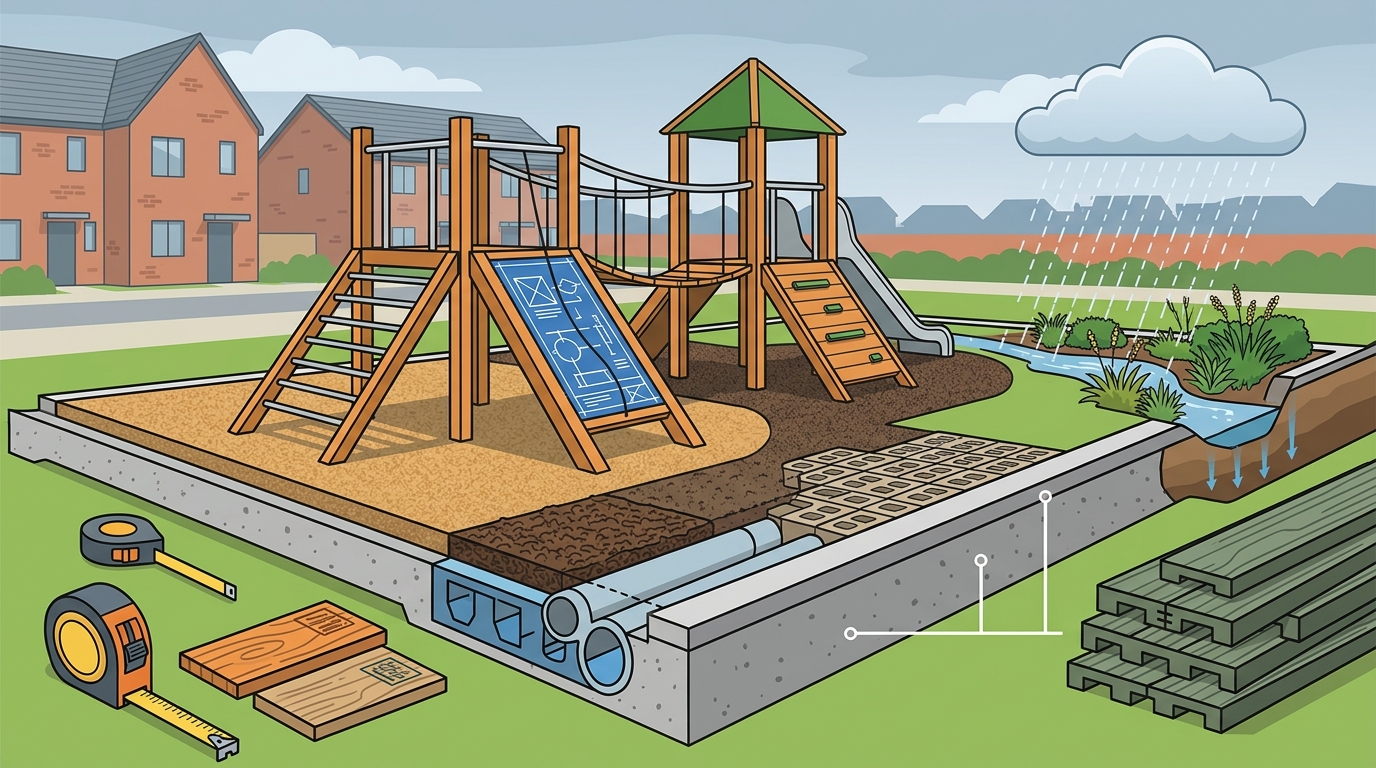
Proper site preparation is the foundation of any successful play area. Poor drainage is a leading cause of play space failure, leading to waterlogging, mud, and accelerated equipment corrosion. In the UK, where rainfall is frequent and often heavy, effective drainage is non-negotiable.
Before installing any equipment, conduct a thorough site survey. Assess the soil type, slope, and existing drainage infrastructure. Implement appropriate drainage solutions, such as French drains or permeable surfacing, to manage water runoff. Permeable surfaces allow water to infiltrate the ground, reducing the risk of flooding and supporting local biodiversity.
Consider the topography of the site. Flat areas are easier to access but may require more extensive drainage works. Sloped sites can offer exciting design opportunities but require careful engineering to ensure safety and stability. Our project portfolio includes examples of play areas designed for diverse terrains, demonstrating how thoughtful site preparation can overcome challenging conditions.
Mistake 5: Skipping Community Consultation
One of the most overlooked aspects of play space planning is community engagement. Developers often design play areas in isolation, assuming they know what residents want. This approach frequently results in spaces that do not meet the actual needs of the community.
Consulting with local residents, schools, and community groups during the planning phase can provide invaluable insights. You might discover a demand for outdoor fitness equipment for adults, sensory gardens for children with special needs, or specific themes that resonate with the local culture. This collaborative approach fosters a sense of ownership and pride among residents, leading to better care and usage of the space.
At Jupiter Play, we facilitate CPD webinars and site visits to help stakeholders understand the possibilities of innovative play design. We encourage developers to engage with our team early in the process to ensure that the final design reflects the community's vision and values.
Comparing Play Equipment Options
Selecting the right equipment involves balancing durability, safety, inclusivity, and cost. The table below compares common types of play equipment based on these criteria.
| Equipment Type | Durability | Inclusivity Potential | Maintenance Level | Suitability |
|---|---|---|---|---|
| Multiplay Units | High | Medium | Low | General purpose play |
| Inclusive Swings | High | High | Low | Accessible play |
| Sensory Panels | Medium | High | Medium | Sensory engagement |
| Climbing Structures | High | Low | Medium | Physical challenge |
| Outdoor Fitness | High | Medium | Low | Adult well-being |
Key Takeaways
- Inclusive design is essential: Ensure your play area welcomes children of all abilities to foster community cohesion.
- Choose sustainable materials: Opt for recycled plastics and responsibly sourced wood to minimize environmental impact.
- Plan for maintenance: Consider long-term costs and select equipment that is easy to repair and maintain.
- Invest in site preparation: Proper drainage and soil assessment are critical for the longevity of the play space.
- Engage the community: Consult with residents to ensure the design meets their needs and expectations.
- Partner with experts: Work with experienced suppliers like Jupiter Play & Leisure to navigate complex planning requirements.
- Focus on longevity: Design for durability and adaptability to ensure the space remains relevant for years to come.
Frequently Asked Questions
What is inclusive play?
Inclusive play is a design approach that ensures play spaces are accessible and engaging for children of all abilities, including those with physical, sensory, or cognitive disabilities.
How can I make a play area more sustainable?
You can enhance sustainability by using recycled materials, ensuring proper drainage to prevent water waste, and selecting durable equipment that requires minimal maintenance and replacement.
Why is community consultation important for play areas?
Community consultation helps identify the specific needs and preferences of residents, leading to a more relevant and widely used play space that fosters a sense of ownership.
What are the best materials for playground surfacing?
Poured-in-place rubber and synthetic grass are popular choices due to their durability, accessibility, and lower maintenance requirements compared to loose fill materials.
How often should playground equipment be inspected?
Playground equipment should be inspected regularly, typically annually, by a qualified professional to ensure safety and compliance with standards.
What is the role of CPD in play space planning?
Continuing Professional Development (CPD) provides planners and designers with up-to-date knowledge on best practices, regulations, and innovations in play space design.
Can I customize a play area for my housing development?
Yes, many suppliers offer bespoke design services to create unique play spaces that fit the specific context and needs of your development.
Ready to Create a Sustainable Play Space?
Avoiding common planning mistakes requires expertise, foresight, and a commitment to quality. At Jupiter Play & Leisure, we are dedicated to helping developers create award-winning play and sports areas that stand the test of time. Our team of experts is ready to guide you through every step of the process, from initial design to final installation.
Whether you are planning a new housing development or upgrading an existing space, we offer tailored solutions that prioritize inclusivity, sustainability, and durability. Contact us today to discuss your project and discover how we can help you create a play area that delights and engages your community for years to come.